Posted on Leave a comment

Saturday Sips Review Club March 2021 Selection (6-Bottle Package, $288) Provence’s Standout Cru: Bandol with Four Masterful Producers

Charming Provence. Between olive groves and pine forests the rocky landscape is wild with the fragrant garrigue that marks its wines. This picturesque southern French region on the Côte d’Azur is famous for its rosé, but with a little bit of digging, and some guidance from your favorite local wine merchant, you can find some of France’s most structured, age-worthy red wines. Although relatively small, Bandol is easily Provence’s most important appellation.
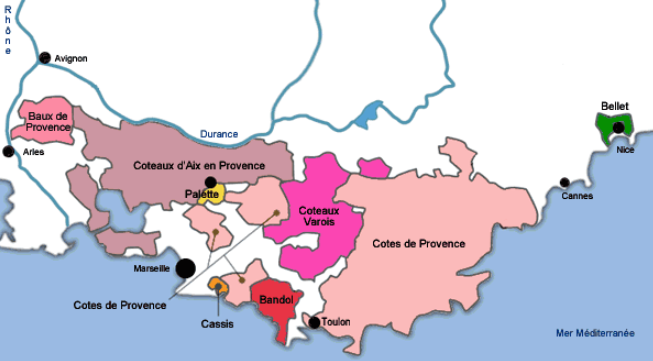
Bandol wine is grown in small quantities in the limestone hills near the village of Bandol, east of Marseille and west of Toulon. It’s sun-soaked southerly terraces brushed with Medditerranean breezes are ideal for cultivating Mourvèdre — a grape variety with one of the longest growing cycles, but when fully ripened has the potential to create some of the most substantial and long-lived wines on our pale blue dot. Being one of mainland France’s driest, sunniest climates, fungal diseases are not the perennial threat they are elsewhere, making the region well-suited to organic viticulture. Bandol red wines must be at least 50 percent Mourvèdre, with the remainder generally blended with the classic grapes of the Mediterranean: Grenache, Cinsault, Syrah, and Carignan.

We are pleased to offer a selection of exceptional wines that speak of sunny Provence. Included in the package are wines from Bandol’s top producers, with five bold and meaty red wines that you can enjoy now or ten years from now, and a rare white Bandol.

Included in Saturday Sips Review Club March 2021 Selection 6-Bottle Package are one each of the following wines:
Domaine Tempier 

One of the oldest family-run estates in the region, Domaine Tempier is also the most recognized. The family was largely instrumental in getting the appellation of Bandol established in 1941. Bandol RED 2018 (Regular $56) is the quintessential expression of Mourvèdre, grown on terraced vineyards on steep hills around the “plan du Castellet.” The wine is full of fruit and earthy flavor, coupled with fine-grained tannins, and a complexity from the multiplicity of soil types that surround the estate, from pure limestone to ancient sandstone and limestone marls. The wine is a blend of Mourvèdre (around 75%), with Grenache and Cinsault, and, in small proportions, Carignan and Syrah, with vines at an average of 35 to 40 years old.
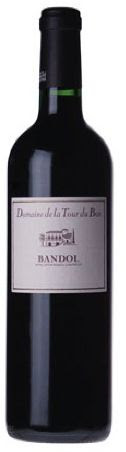
Domaine de la Tour du Bon 

Agnès Henry is the winemaker and owner of Domaine de la Tour du Bon. Although the estate has been in the family since 1968, it is Agnès that has cemented its current acclaim. Her 42 acres are a mix of red earth, clay, sand, and gravel that all rest atop a limestone plateau near the village of Le Brûlat. Agnès calls her Bandol RED 2016 (Regular $38) true “blood of the earth.” The blend is 53% Mourvèdre, 27% Grenache, 10% Cinsault, and 10% Carignan from extremely low-yielding vines. The Grenache adds a light cherry fruit to balance out the striking power of the Mourvèdre, while the small additions of Cinsault and Carignan work to bind the two main varieties.
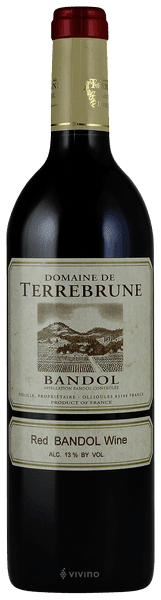
Domaine de Terrebrune

Reynald Delille heads this lauded estate nestled among the foothills of the limestone massif of Gros Cerveau. Certified organic, the estate’s terroir is characterised by the presence of limestone in its brown clay soil which inspired the estate’s name. With Mourvèdre accounting for 85% of the final assemblage, Reynald’s Bandols have an ethereal quality to them — the vineyards lie directly in the path of marine breezes that sweep off the Mediterranean, providing his wines with a mouthwatering saline quality. Bandol RED 2016 (Regular $54) is a fine example. With flavors of black fruit, anise, and wild herbs, its rich texture seems effortless, and its minerality profound. Bandol WHITE 2019 (Regular $41) is a blend of Clairette, Ugni Blanc, and Bourboulenc that shows remarkably subtle ripe peach and pear notes that are balanced with a refreshing, herbal greenness.
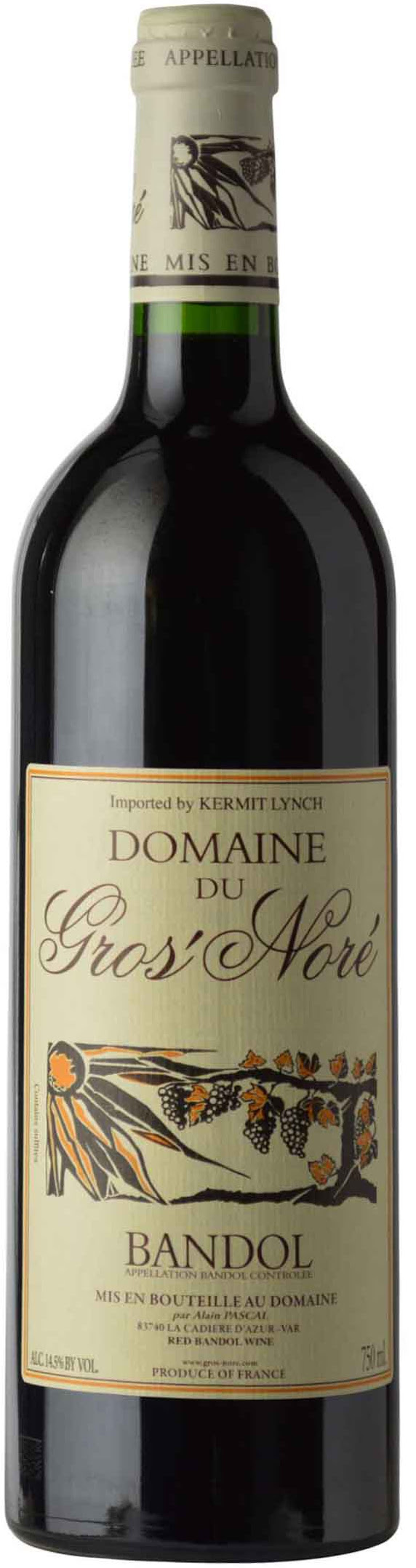
Domaine du Groś Nore 

Born in a small house set among the vineyards of Bandol, Alain Pascal always knew he wanted to be a farmer. He bottled his first estate wines in 1997. From the very beginning, Alain produced his wines with minimal intervention — bottled without filtering and fermented with indigenous yeasts. Cultivation is essentially organic, as no chemicals are used on the vines. To provide power and concentration, Alain uses 80% Mourvèdre in Bandol RED 2016 (Regular $47), his flagship cuvée. The rest of the blend is 15% Grenache and 5% Cinsault. The wine is fermented in stainless steel vats and then aged for 18 months in large oak foudres. It has a lovely, elegant nose of jellied black cherry fruit and mediterranean herbs. It’s bold yet supple on the palate with concentrated fruit, clean earth, stone, and refined tannins. Bandol RED 2011 (Regular $79) has a few years of maturity. The 2011 vintage shows similar characteristics as the 2016, but has softened and integrated a bit more.
Posted on Leave a comment

Champagne Society December 2020 Selection

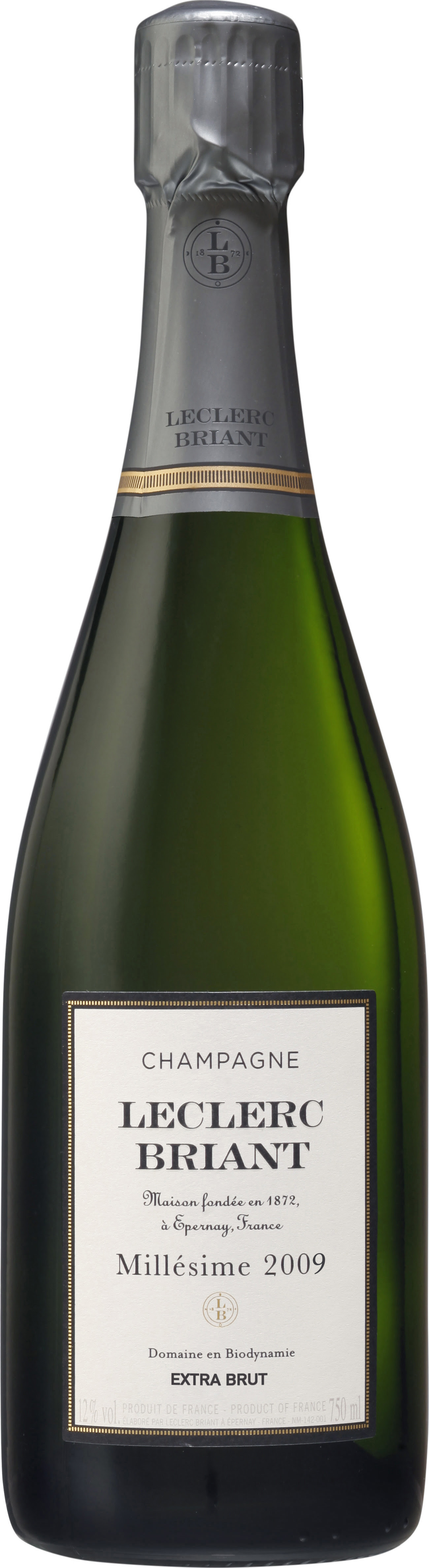
Champagne Leclerc-Briant Millésime 2009 (Extra Brut)
Price for The Champagne Society members: $75, limit 2 bottles

Founded in the village of Cumières in 1872 by Lucien Leclerc, Champagne Leclerc Briant saw five successive generations of Leclercs that were true innovators and who are counted amongst the pioneers of organic and biodynamic viticulture in Champagne. Today, enologist Hervé Jestin continues the legacy of this visionary house.
The estate holds 24 acres of vineyards divided between the Premier Cru villages of Cumières, Hautvillers, Mareuil-sur-Aÿ, Bisseuil in the Vallée de la Marne, Villers-Allerand and Rilly la Montagne in Montagne de Reims and the Grand Cru village of Le Mesnil Sur Oger in the Côte des Blancs. Their holdings also include one tiny plot, called La Croisette, right in the heart of Epernay.

In recent years, the premises have been extensively refurbished and improved with the aim of creating wines of the utmost quality. Their extensive cellars are more than a half of a mile in length and over 100 feet below the surface — ideal for maturing champagne.

Certified biodynamic, Leclerc-Briant Millésime 2009 is produced from 40% Chardonnay; 40% Pinot Noir and 20% Pinot Meunier from the Premiers Crus villages of Hautvillers and Cumières as well as the village of Verneuil located on the right bank of the Marne. The wine was fermented and aged for seven to eight months in stainless steel and cement tanks followed by nearly eight years in bottle before disgorgement in June of 2017 when it received a low dosage of just 4 grams per liter. Only about 800 cases were produced.

Long maturity and the ripe 2009 vintage gives the wine a lushness to balance a brisk low dosage and salty finish. Notes of lemon curd, white flowers, and brioche add to its elegance. A beautiful Champagne inside and out as the label design was inspired by the influential publishing house Éditions Gallimard’s iconic book cover design.

Posted on Leave a comment

Champagne Society October 2020 Selection

Champagne Lancelot Pienne “Instant Présent” Blanc de Blancs Brut NV
Price for The Champagne Society members: $59

“Gilles Lancelot produces lean, light, bright and crisp, spring-like Champagnes of remarkable purity and freshness. The style…is perfectly dry, pure, very refined, straight and mineral. These are elegant, and rather lean and filigreed rather than big, mouth-filling Champagnes.”

— Stephan Reinhardt, Wine Advocate

Based in Cramant, Gilles Lancelot comes from a long line of growers. He farms 22 acres of vines spread over 55 parcels along the northern sector of the Côte des Blancs, the Côteaux Sud d’Epernay, and into the Marne Valley. The average age of his vines are 40 years old with the oldest over 60 years.
Gilles farms his vines sustainably, with careful monitoring of his multiple parcels. Fermentation is done only in steel or glass-lined concrete vats in order to have the clearest expression of the wines and dosage is minimal.

A member of Les Artisans du Champagne — one of the more elite of the bands of growers in Champagne — Gilles’ annual production averages less than 6,000 cases, allowing him exacting control to produce the best possible Champagne. The proof is in a bottle of “Instant Présent.” 100% Chardonnay from vines averaging 40 years of age growing along the Côte des Blancs as well as from Monthelon and Mancy, two villages south of Epernay in the Côteaux Sud d’Epernay. The wine is aged on its lees for 30 months before disgorgement and has a dosage 7 grams. It is ideal as an apéritif: fresh, lifted, chalky, and full of white and yellow orchard fruits.

Posted on Leave a comment

The Champagne Society August 2020 Selection

Champagne Joseph Perrier “Cumières – La Côte à Bras” Blanc de Noirs (Premier Cru, Brut Nature 2010)

Price for The Champagne Society members: $85 (regular price $99)

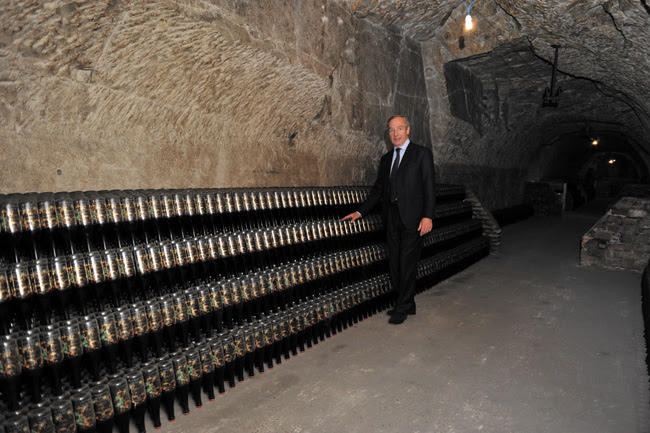
Champagne Joseph Perrier owns 51 acres of vineyards, situated in the heart of the Vallée de la Marne on the right bank of the River Marne, around the villages of Hautvillers and Cumières – both classed at an impressive 93% in the Échelle des Crus system. Founded in 1825, the estate has been owned and run by the same family since 1888. Current proprietor Jean-Claude Fourmon represents the fifth generation. The estate’s cellars stretch almost two full miles and date back to the Gallo-Roman period.
Vallée de la Marne is noted for its powerful Pinot Noir grown on south-facing slopes. Naturally, Champagne Joseph Perrier’s vineyards are mostly planted with Pinot Noir. Indeed, the limited release “Cumières – La Côte à Bras” Blanc de Noirs is 100% Pinot Noir from a single parcel named La Côte à Bras in the Premier Cru village of Cumières. The wine is aged a minimum of seven years and there is no added sugar after disgorgement.

Winemaker Notes:
“A quiet autumn peacefully guided the vines towards the winter break. January experienced very cool temperatures that continued until March.  Flowering was delayed due to some cool nights in June. After that the heat arrived and the month of July ended with some violent storms. The grapes had plenty of water but the September sun dried the soil. The late ripening resulted in berries arriving at the press with very good sugar levels.

The appearance is of yellow gold straw, with amber highlights. The nose opens with tangy, delicate and captivating aromas revealing notes of freshly squeezed citrus fruits – grapefruit and mandarin. The palate is vinous and with plenty of attack, with pronounced mineral notes. The finish is long and harmonious, dominated by a zesty lemon freshness so characteristic of Joseph Perrier.”

Posted on Leave a comment

The Champagne Society — June 2020 Selection

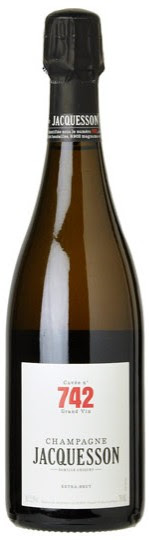
Champagne Jacquesson “Cuvée 742” (Extra Brut)
Price for The Champagne Society members: $76 (regular price $89)

Long-time subscribers to The Champagne Society will no doubt be familiar with Champagne Jacquesson’s 700-series created to showcase the character of a particular vintage with the addition of a small amount of reserve wines designed to reinforce the complexity of the base wine.

Indeed, the 700-series is proving to be consistently one of the best non-vintage Champagnes available. We are pleased to share “Cuvée 742” – their latest release based on the 2014 vintage.

Although technically a Champagne house, brothers Laurent and Jean-Hervé Chiquet operate Champagne Jacquesson much like a grower operation. Besides their own organic and sustainably farmed 69 acres of vineyard (severely pruned for low yields), they work closely with their neighbors to supplement from an additional 19 acres, all in Grand Cru and Premier Cru vineyards. What sets them apart is their goal of producing a wine that expresses the greatness of their vineyard parcels rather than merely maintain a “house style.” Purely on the refinement of its current cuvées, Jacquesson can easily be ranked among Champagne‘s top six producers.
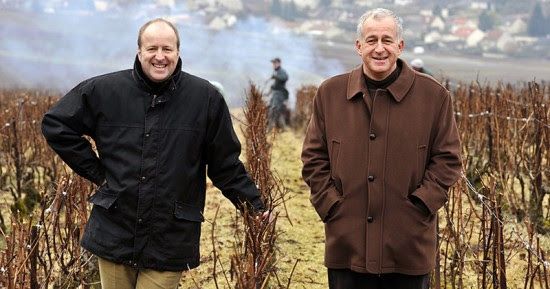
Laurent and Jean-Hervé describe their 2014 harvest from the Premiers Crus and Grands Crus villages of Aÿ, Dizy, Hautvillers (59%) and Avize and Oiry (41%): “Winter was rainy and exceptionally mild, spring was hot and very dry, whilst July and August were cool and very wet. A hot, dry and sunny September saved the year. The balance of alcohol and acidity was excellent and the health of the grapes was generally good. However, after picking, rigorous sorting of some parcels affected by small sources of acid rot was necessary. As a result, the Chardonnays were superb, and the Meuniers, but above all the Pinot Noirs, held their own. The blend is completed with the addition of some reserve wines.”

The dosage is minimal at 1.5 grams per liter. The result is a Champagne with the energy and sap one expects from the 700-series that reflects all the vitality of the vintage. William Kelley of Robert Parker’s Wine Advocate describes it lovingly: “Wafting from the glass with a complex bouquet of walnut oil, dried white flowers, saffron, citrus oil and crisp orchard fruit, along with a delicate top note of fino sherry, it’s medium to full-bodied, sapid and incisive, with superb concentration, racy acids and a long, resonant finish. I found it irresistible.”

Posted on Leave a comment

The Champagne Society April Update — Free Delivery and “Wine Aid”

These are challenging times and we are committed to providing you with the finest wines available to humanity in the safest way possible. The April selection from the Champagne Society is coming up next week and we wanted to let you know that we are offering free delivery to your porch so that you can continue to maintain proper social distancing. Please reply to this email with your street address if you would like to take advantage of this option.

Surgeon general, Dr. Jerome M. Adams, along with the Centers for Disease Control and the World Health Organization, have indicated that there is currently no evidence that COVID-19 is being spread through the mail or package delivery. Even so, know that we are obsessively disinfecting every surface in the shop, including the bottles that go our for delivery and pickup, and ourselves.


Wine Aid

Price for Champagne Society: $250 (Regular Price: $293.62) The price includes tax and delivery, as well as the Champagne Society’s usual 15% discount.

Since we’ll already be heading to your doorstep, we thought you might want to take advantage of a special offer we are extending to our Champagne Society members that adds five bottles of red wine to your bottle of Champagne.

“Wine Aid” is a diverse mix of five bottles of red wine from some of France’s most significant producers. Included in the “Wine Aid” Box is one bottle of each:

1) Bertrand-Bergé “Jean Sirven” (Fitou 2013) Regular price $79
Extremely low yields produce this Mediterranean estate’s crown jewel named after winemaker Jérôme Bertrand’s great-grandfather. A blend of 45% Carignan, 45% Syrah, and 10% Grenache aged for 18-20 months in new French oak barrels results in a heady and concentrated wine loaded with fruit and capable of developing for over a decade if you can keep it out of your glass now.

2) Domaine Saint Patrice “Vieilles Vignes” (Châteauneuf-du-Pape 2016) Regular Price $59
The unique character of this wine comes from the diversity of its many terroirs. A blend of Grenache, Mourvèdre, and Syrah. In the cellar, maceration and fermentation are done in concrete tanks. Aging takes place over 14 months in concrete vats, large oak foudre, half-muids, and barrique with a further 12 months after bottling. On the nose are luscious red and black fruits with a hint of kirsch beneath warm terracotta and mint. A sip is simultaneously ripe and pulsing with wiry energy.

3) Domaine des Roches Neuves “Clos de l’Echelier” (Saumur-Champigny 2015) Regular Price $59
Biodynamically cultivated from a seven acre, walled vineyard of 40 year old vines in the commune of Dampierre sur Loire. Soils are very thin clay over Turonian limestone. 50% whole cluster fermentation before 12 months aging in 1,200L foudre and 600L demi-muid and then six months in bottle. A glass is filled with the sappiest black raspberry fruit with aromatic hints of herbs and rain.

4) Domaine Ragot “La Grande Berge” (Givry, Premier Cru 2014) Regular Price $42
This Premier Cru parcel is located along a rocky, east-facing slope in Burgundy’s Côte Chalonnaise. Aging takes place in French oak (30% new) for between 12 and 15 months. Grande Berge produces wines that are known for their subtlety and finesse and this 2014 is a prime example. A glass is bursting with aromatics, the foremost a heady floral component reminiscent of Chambolle-Musigny. Alongside are fresh berries, red licorice, and baked stone. A sip is simultaneously concentrated and spry, with a long, energetic finish.

5) Maxime Magnon Rozeta (Corbières 2016) Regular Price $38
A native of Burgundy, Maxime Magnon’s approach is to produce wines that speak of the land with emphasis on purity of fruit and drinkability. This philosophy couldn’t be more apparent in the 2016 vintage of “Rozeta,” a field blend of Carignan, Grenache, and Cinsault from vines of 50-60 years in age. A glassful exudes heady aromatics of strawberry jam and pink floral arrangements that rise above subtler scents of fennel frond and dusty earth. A sip is concentrated red fruit on a fine frame of coiled energy that unfolds over the course of a lengthy, mineral finish.

Posted on Leave a comment

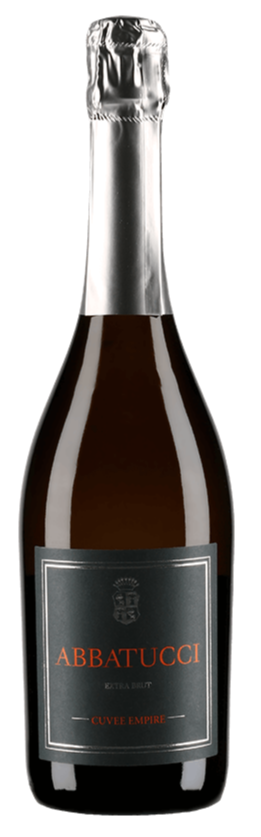
The Champagne Society – April 2020 Selection Domaine Comte Abbatucci “Cuvée Empire”

Domaine Comte Abbatucci “Cuvée Empire” (Vin de France Extra Brut, 2015)
Price for The Champagne Society members: $76 (regular price $89)

“Cuvée Empire” is a blanc de noirs sparkling wine produced in the traditional method from 100% Barbarossa, a red/pink variety. Fermentation takes place in a 12,000 liter foudre and the wine is aged on its fine lees for four months. A secondary fermentation takes place in the bottle for another year. The Extra Brut dosage is 4 grams/liter. This is easily one of the most unique sparkling wines in the world.
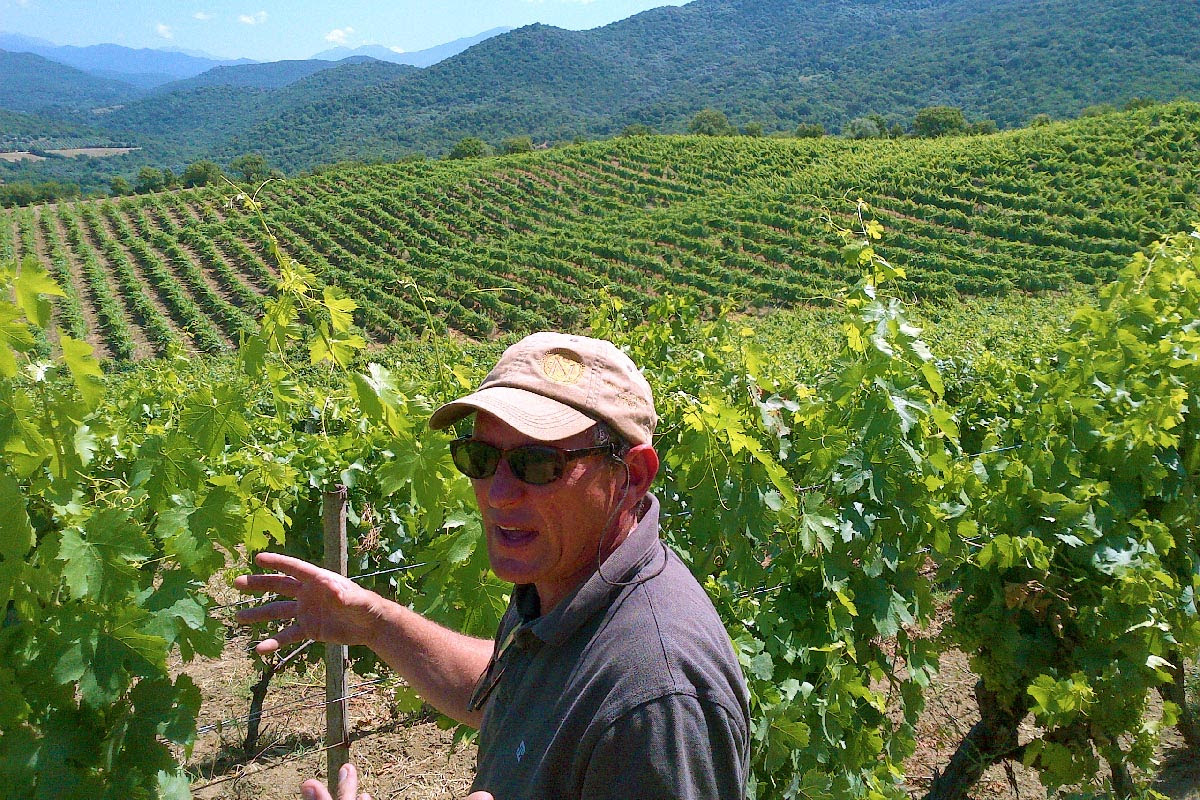
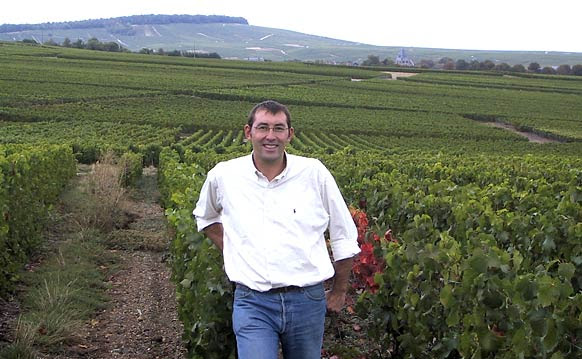
Although the island of Corsica is France’s most southerly vineyard area, it is surprisingly not its hottest. Elevation and wind modify the realities of latitude, demonstrated by the remarkable freshness of the best of Corsica’s white wines, and the almost Burgundian grace of its best reds. With a rediscovery of indigenous grape varieties and a focus on quality production, Corsica is one of the most exciting wine regions in France right now.

Easily one of the top producers in Corsica, Jean-Charles Abbatucci creates majestic and fiercely unique wines from the granitic western coast of Corsica. He has created a pristine poly-culture ecosystem on his estate south of Ajaccio that includes groves of olive trees on ancient terraces, and large swaths of untouched forests. Jean-Charles believes in following even the most offbeat biodynamic practices to the letter. He goes so far as to drive a tractor around his vineyards, playing traditional Corsican polyphonic songs over loudspeakers to the vines and the herds of sheep foraging through them.

Located in southern Corsica, in the heart of the Taravo Valley, and at an altitude of about 300 feet, many of the estate’s vines come from cuttings of indigenous varieties sourced decades ago by his father (then President of the Chamber of Agriculture of Corsica) from peasant farmsteads in the mountainous and remote interior of the island. Including the vines that produce the fruit for the “Cuvée Empire.”

Jean-Charles is so dedicated to the idea of returning to the culture of traditional Corsican vines that he has completely eschewed the appellation system and currently bottles all of his wines under the Vin de France label. In a recent interview, he says, “At first I didn’t leave completely, I just began the Cuvée Collection of old varieties and bottled them as Vin de France. But five years ago I decided the system was just too restrictive, too limited. We are in a time where agriculture is disappearing and we need to support the traditions that make us who we are.”

Posted on Leave a comment

The Champagne Society – April 2020 Selection Larmandier-Bernier “Longitude”

Champagne Larmandier-Bernier “Longitude” Extra Brut (Premier Cru)

“To create a wine that deeply expresses its terroir is Pierre Larmandier‘s aim… But to this fastidous grower, terroir in itself is not enough. ‘Terroir is to wine what the score is to music,’ he suggests. ‘What’s the point if the grape variety, the vine plant (the instrument) and the winegrower (the performer) are not up to standard?’ Some growers are known for their focus on the vines, others for their attention in the winery, but few find a balance in every detail like Pierre Larmandier.” – Tyson Stelzer, The Definitive Guide to Champagne

Pierre Larmandier holds close to 37 acres of vines, 33 years old on average, all in Premier and Grand Cru villages of the Côte des Blancs. Biodynamically certified since 2004, he describes himself as an “organo-realist,” as one must be cultivating vines in this most northern of production zones. Naturally moderate yields and site-specific indigenous yeast fermentation allows Pierre to extract the character of each vineyard parcel. A light but measured hand in the cellar preserves that character in the bottle.

Champagne Larmandier-Bernier cuvée “Longitude” is made exclusively from Chardonnay grown on the Côte des Blancs from the Premier Cru Vertus, and the Grand Crus Oger, Avize, and Cramant, which form a line close to the 4th meridian. The base consists of 2012 vintage juice (60%) blended with reserve wines made through all vintages from 2004 to 2011. The wines are left on their natural lees for nearly a year and undergo gentle bâtonnages. After blending and bottling, maturation occurs over a period of more than two years. A further six months of resting takes place after disgorgement. The dosage is a low four grams per liter (Extra Brut).

In the glass, the tremendous chalk minerality of these villages are manifested from start to finish. With a richness belying its minimal dosage, notes of lemon, apple and pear are backed by toast, grassy meadows and epic length. This Champagne pairs especially well with late brunch and spring birdsong.