Posted on Leave a comment

The Champagne Society – April 2020 Selection Larmandier-Bernier “Longitude”

Champagne Larmandier-Bernier “Longitude” Extra Brut (Premier Cru)

“To create a wine that deeply expresses its terroir is Pierre Larmandier‘s aim… But to this fastidous grower, terroir in itself is not enough. ‘Terroir is to wine what the score is to music,’ he suggests. ‘What’s the point if the grape variety, the vine plant (the instrument) and the winegrower (the performer) are not up to standard?’ Some growers are known for their focus on the vines, others for their attention in the winery, but few find a balance in every detail like Pierre Larmandier.” – Tyson Stelzer, The Definitive Guide to Champagne

Pierre Larmandier holds close to 37 acres of vines, 33 years old on average, all in Premier and Grand Cru villages of the Côte des Blancs. Biodynamically certified since 2004, he describes himself as an “organo-realist,” as one must be cultivating vines in this most northern of production zones. Naturally moderate yields and site-specific indigenous yeast fermentation allows Pierre to extract the character of each vineyard parcel. A light but measured hand in the cellar preserves that character in the bottle.

Champagne Larmandier-Bernier cuvée “Longitude” is made exclusively from Chardonnay grown on the Côte des Blancs from the Premier Cru Vertus, and the Grand Crus Oger, Avize, and Cramant, which form a line close to the 4th meridian. The base consists of 2012 vintage juice (60%) blended with reserve wines made through all vintages from 2004 to 2011. The wines are left on their natural lees for nearly a year and undergo gentle bâtonnages. After blending and bottling, maturation occurs over a period of more than two years. A further six months of resting takes place after disgorgement. The dosage is a low four grams per liter (Extra Brut).

In the glass, the tremendous chalk minerality of these villages are manifested from start to finish. With a richness belying its minimal dosage, notes of lemon, apple and pear are backed by toast, grassy meadows and epic length. This Champagne pairs especially well with late brunch and spring birdsong.

Posted on Leave a comment

Domaine Mongeard-Mugneret — Over Two Decades of Great Red Burgundy in the Shop

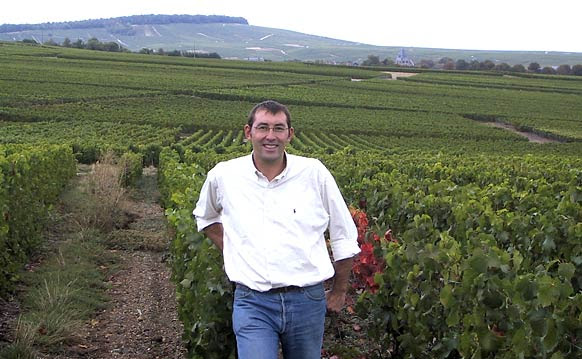
Vosne-Romanée is full of Mugnerets, famous ones known through generations for producing great wines. The current winemaker at Domaine Mongeard-Mugneret, Vincent Mongeard, is obviously not a Mugneret. But his grandmother was. And in 1945, when Vincent’s father, Jean Mongeard, decided to bottle his wines instead of selling off barrels to other estates, he combined the last names of his parents, who had worked the land before him, as the name of his winery.
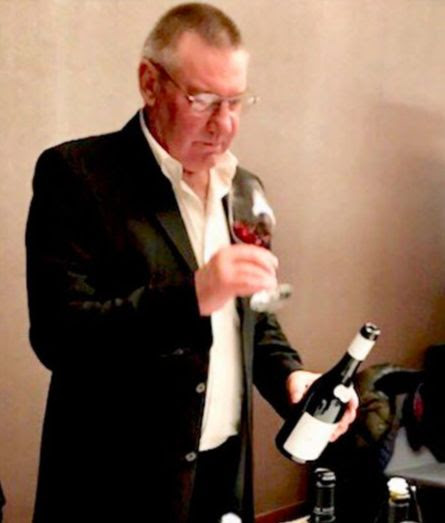
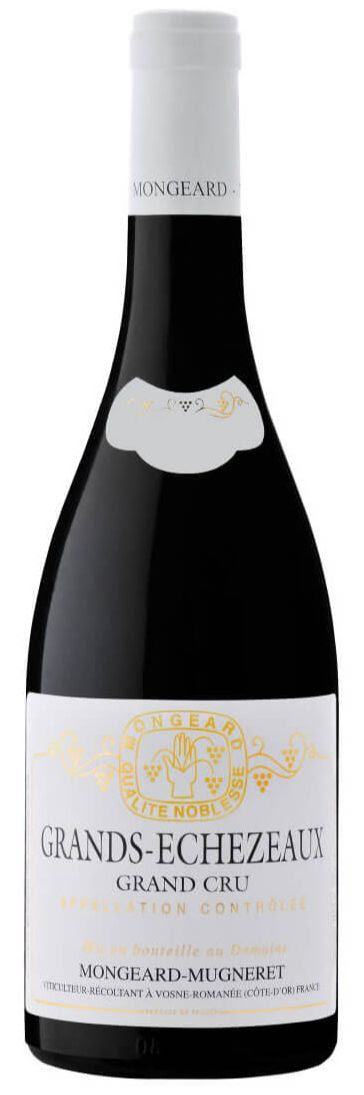
Today, Vincent Mongeard works about 74 acres spread over 35 appellations. While the estate is based in Vosne-Romanée, he produces wines from some of the most hallowed parcels in all of Burgundy, including Richebourg, Grands-Échezeaux, Échezeaux , Clos de Vougeot, and Vosne-Romanée Les Suchots.
All parcels are worked sustainably (la lutte raisonée) with a focus on soil health. Fruit is harvested exclusively by hand and manually sorted in the winery. Fermentation begins naturally with indigenous yeasts.

Most wines are matured in a range of new and used oak barrels with meticulous attention to sourcing fine-grain oak from Nièvre and the Tronçais forest in Allier. The oak is cured at the domaine for 18-24 months and a local cooper assembles the barrels.

We are pleased to offer several vintages and appellations of the wines from Mongeard-Mugneret. These are all wines that have been kept under temperature control in our shop since their purchase on release.


All prices based on purchase of 6-pack (mix-and-match)
“Les Dames Huguettes” (Bourgogne Hautes-Côtes de Nuits)
~$40 (2017)
~$33 (2014)

100% Pinot Noir from six acres of calcareous and deep soils on Argovian marls. The average age of vines is 35 years and maturation takes place in one year old barrels.
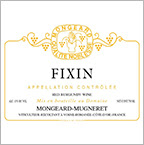
 

~$53 Fixin (2014)

100% Pinot Noir from three acres of stony soils on argillo-calcareous subsoils. The average age of vines is 40 years and maturation takes place in 5-10% new oak barrels.
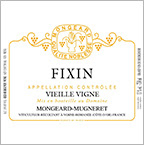
 

~$62 “Vieille Vigne” (Fixin 2017)

100% Pinot Noir from 1.4 acres of stony soils on argillo-calcareous subsoils. The average age of vines is 65 years and maturation takes place in 5-10% new oak barrels.
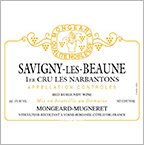
 

“Les Narbantons” (Savigny-Lès-Beaune Premier Cru)
~$67 (2017)
~$62 (2014)
~$89 (2009)
~$89 (1996)

100% Pinot Noir from 3.4 acres of limestone soil with sandy marls. The average age of vines is 53 years and maturation takes place in 30-40% new oak barrels.
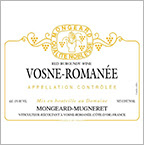
 

~$80 Vosne-Romanée (2017)

100% Pinot Noir from five acres of limestone resting on stony and marly subsoils. The average age of vines is 45 years and maturation takes place in 30-40% new oak barrels.
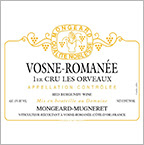
 

~$89 “Les Orveaux” (Vosne-Romanée Premier Cru 2014)

100% Pinot Noir from 2.7 acres consisting of a shallow layer of fertile alluvial soil on limestone. The average age of vines is 25 to 52 years and maturation takes place in 30-40% new oak barrels.
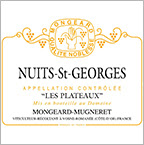
 

~$62 “Les Plateaux” (Nuits-St-Georges 2014)

100% Pinot Noir from 1.75 acres of argillo-calcareous soil from the middle Jurassic. The average age of vines is 45 years and maturation takes place in 30-40% new oak barrels.


“Les Boudots” (Nuits-St-Georges Premier Cru)
$108 (2017)
$144 (2003)
$144 (1996)

100% Pinot Noir from one acre of fine-textured clay loams on Bajocian limestone. The average age of vines is 30 years and maturation takes place in 30-40% new oak barrels.
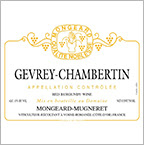
 

$99 Gevrey-Chambertin (1996)

100% Pinot Noir from one acre of pebbly-alluvail deposits on argillo-calcareous soils. The average age of vines is 40 years and maturation takes place in 30-40% new oak barrels.
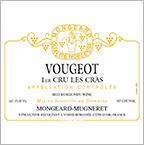
 

$108 “Les Cras” (Vougeot Premier Cru 2017)

100% Pinot Noir from 0.8 acres of hard limestone with clay. The average age of vines is 35 years and maturation takes place in 30-40% new oak barrels.
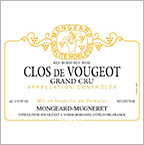
 

Clos de Vougeot (Grand Cru)
$243 (2017)
$288 (2009)

$288 (2003)
$351 (1996)

100% Pinot Noir from 1.5 acres of hard limestone with low clay levels. The average age of vines is 45 to 50 years and maturation takes place in 80-100% new oak barrels.
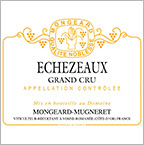
 

$198 Échezeaux (Grand Cru 2017)

100% Pinot Noir from 4.5 acres of hard limestone with clay. The average age of vines is 25 to 60 years and maturation takes place in 60-80% new oak barrels.

 

$279 “La Grande Complication” (Échezeaux Grand Cru 2017)

100% Pinot Noir from selected vines in a 0.8 acre parcel of hard limestone with a heavy clay content that was planted in 1945. Maturation takes place in 60-80% new oak barrels.
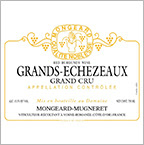
 

Grands-Échezeaux (Grand Cru)
$171 (2014)
$315 (2003)

100% Pinot Noir from 3.5 acres of rich clay on Bajocian limestone. The average age of vines is 40 to 68 years and maturation takes place in 100% new oak barrels.

Posted on Leave a comment

Clos de Mez — Cru Beaujolais of Consequence

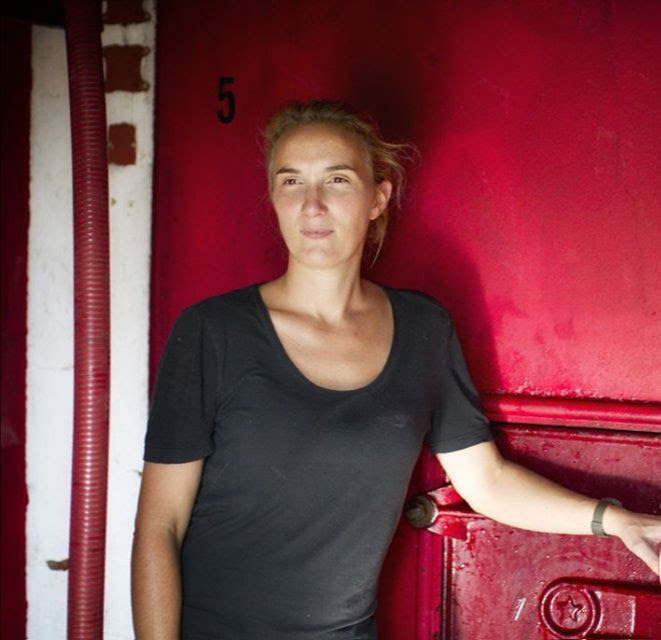
Vines have been in Marie-Élodie Zighera Confuron’s maternal family for four generations but she is the first of the family to produce and bottle the wines under her own name. Living in Paris as a teenager, she would travel to the family vineyards in Fleurie on holidays. Wandering the rows on those trips made her feel closer to nature and by the time she was fifteen years old she knew that she wanted to make wine.

When her grandmother passed away the family moved to Lyon and she began the process of studying viticulture. The plan was that she would make the wine using fruit from the family’s domaine and her father would sell it. Unfortunately, her father died young and she would have to go it alone.
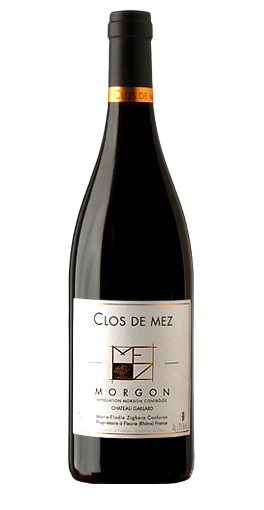
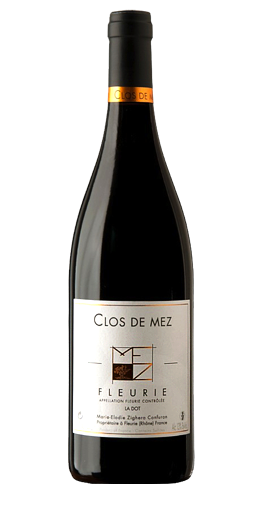
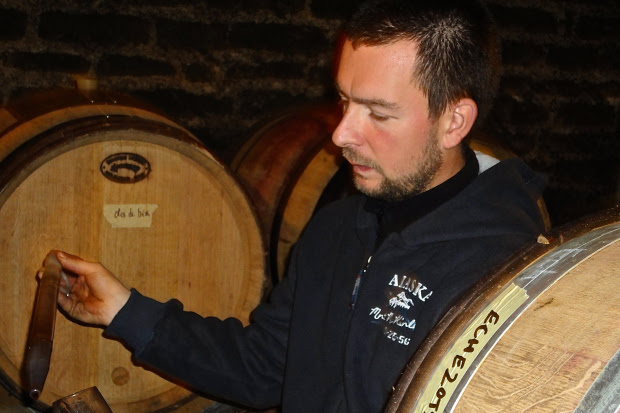
Marie’s work placements took her through Beaujolais, southern Rhône, and finally to Château de la Tour in Clos Vougeot where, in 2004, she tasted a Morgon wine from the 1911 vintage. It was such a magnificent bottle that it inspired her to produce her own wines in a similar, ambitious style — structured and cellar-worthy. A couple of years later Clos de Mez (a shortened version of her name) was formed.

The other relationship that informs her on the world of high-quality Burgundy is literally right at home. She is married to Jean-Pierre Confuron, the owner of the heralded Vosne-Romanée estate of Confuron-Cotetidot.

Today Clos de Mez is a certified organic estate of a little over 12 acres in size. Marie’s wine is made with indigenous yeasts, no temperature control, no insulation, and long fermentations with the stems — just like it would have been back in 1911. Maturation takes place in both old barrels and concrete.

All prices based on purchase of 6-pack (mix-and-match)

~$26 “Château Gaillard” (Morgon 2012) OUT OF STOCK

The soil in Morgon is rich in iron oxide with traces of manganese and volcanic rock, helping to create full-bodied, powerful, toothsome wines. “Château Gaillard” is the name of the lieu-dit where the 80 year-old vines grow to produce this cuvée. Aromas of ripe cherry, apricot, plum, and spice lead into a palate that is robust and fleshy.


~$26 “La Dot” (Fleurie 2012) OUT OF STOCK

Fleurie are renowned for their light and delicate aromas and hence the region is sometimes referred to as the ‘Queen of Beaujolais.’ “La Dot” is so named because it was a dowry gift for Marie’s grandmother’s wedding. It is a five acre plot of pinkish granite soils near the famous lieu-dit of Grille Midi in the south of Fleurie. The average age of the vines is close to 50 years old. Aromas of iris, violet, rose, and red fruit eventually give way to notes of spice. It is a wine of body, elegance, and finesse.

Posted on Leave a comment

New 2016 Vintage Domaine Bart – Some of Our Best Value Red Burgundy from the Côte de Nuits

For the past few years, the wines of Domaine Bart have been some of our greatest Burgundy values and the 2016 vintage is no different. It was quite a challenging year for the domaine, where frost reduced yields so much that they were forced to combine parcels just to have a sufficient amount to vinify. But the fruit that matured was good quality with relatively thick skins and a fairly high percentage of “shot berries” — both attributes that make for good concentration and extraction of the Pinot Noir variety.

Pierre Bart is the sixth generation at Domaine Bart. Since 2009 he’s been running the 54 acre domaine along with his uncle, Martin. His grandmother comes from the same family as Domaine Bruno Clair, explaining why there are holdings in the Grand Crus of Bonnes-Mares and Chambertin-Clos de Bèze, as well as Santenay. Indeed, a good portion of the estate’s holdings come from the split of the renowned Domaine Claire-Daü between Domaine Bart and Domaine Bruno Clair (even another portion was sold off to Louis Jadot). Prior to the split, Domaine Claire-Daü was one of the most heralded and respected producers in the region, nearly single-handedly bringing the appellation of Marsannay its current status.
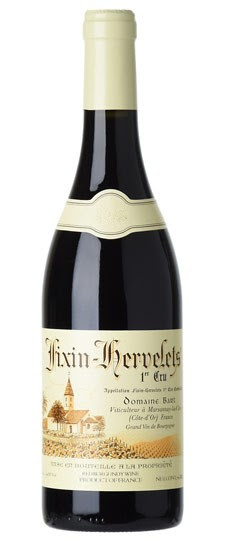
Pierre and Martin’s wines are balanced and classic Burgundy, understated with grace and elegance. It begins in the vineyard with sustainable and organic farming practices on every parcel. Each parcel is worked by hand according to its specific microclimate. The use of new oak is judicious and depends on the parcel. According to Pierre, “We make very fruity wines in classic style. The main words at our domaine are fruit and balance, balance between fruit, acidity and tannins. So we don’t produce big extracted wines. We try to respect the fruit.”

These are not merely “fruity” wines. The “goût de terroir” of Côte de Nuits is unmistakable in each and every bottle. Yet, for the most part these are wines for drinking, not stuffing into the corners of a cellar. Pair a few bottles with your best friends and a rich poultry stew.

2016 Burgundy from Domaine Bart


All prices based on purchase of 6-pack (mix-and-match)

$36 “Les Echezots” (Marsannay)
The Les Echezots vineyard gets more cool winds from the Hautes-Côtes. Subsequently the grapes ripen later there and it is always the last parcel to be harvested. A wine of concentration and richness.

~$44 “Champs Salomon” (Marsannay)
One of Domaine Bart’s best Marsannay vineyards is located in a prime spot on the mid-slope, producing wines which combine power, elegance, minerality, and longevity.

~$42 Fixin 
The fruit is mostly from Le Clos with a small amount from the neighboring parcel of Champs Pennebaut. A sauvage nose of redcurrant and earth precede a supple yet precise concentration.

~$67 “Les Hervelets” (Fixin, Premier Cru)
The fruit is from both Les Arvelets and Les Hervelets. These are the top parcels in Fixin. Dark fruits, hints of earth and spice, and a bit of heft from the more pronounced tannic structure allow this expression longer term aging potential.

$252 Bonnes Mares (Grand Cru)
Domaine Bart’s Bonnes Mares parcels are next to those of Comte de Vogüe. While it is a powerful, long-lived wine, there is an attractive mouthfeel that should permit it to drink well in the shorter term.

$252 Chambertin Clos du Bèze (Grand Cru)
The fruit is from a one acre parcel with vines that were originally planted in 1904. Harmonious, expressive and intense, only a tiny amount is produced.

Posted on Leave a comment

New Vintage of Right-Bank Bordeaux Project from Jacques Thienpont, Maker of Le Pin

L’Hêtre (Castillon Côtes de Bordeaux 2017)
Special Price: $173/6-pack (~$29/bottle)

It has been almost exactly one year since we brought in the very first vintage (2016) of L’Hêtre. Given the quality, the price, and the fact that we weren’t able to get much, the wines sold out rather quickly. We are pleased to offer the recently released 2017 vintage at the exact same prices as last time. Everyday Bordeaux doesn’t get much better than this.

Indeed, one of the simplest ways to find these types of value wines is to mine the lower-priced bottlings from producers that have a solid reputation for making some of the world’s greatest wines. Jacques Thienpont‘s tiny Pomerol estate of Le Pin produces one of the most sought after wines today. It is in such high demand that even current vintages can fetch upwards of $5,000 per bottle. While Jacques Thienpont’s newly acquired Castillon property is no Le Pin, you can expect that he is just as dedicated to elaborating the best possible wine the terroir is capable of producing.
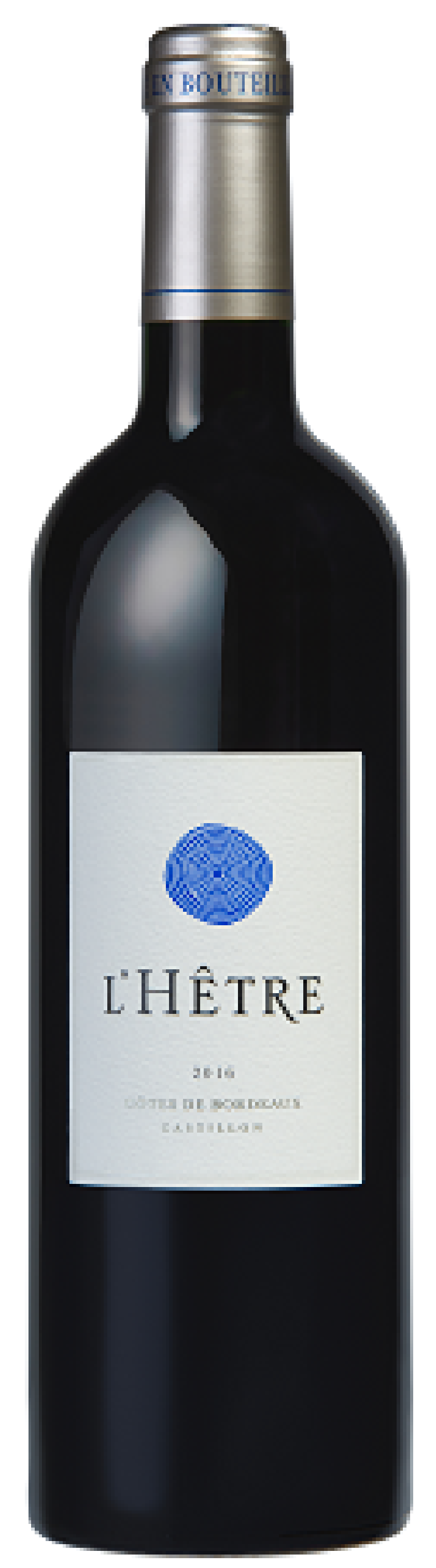
The 25 acre estate is situated at about 300 feet in elevation at the end of the Saint Philippe d’Aiguilhe plateau that runs eastwards from Saint-Émilion and is the highest point in the region. Given his affection for trees – Jacques’ other wineries are Le Pin (pine) and L’If (yew) – the Château Goubau was renamed L’Hêtre (beech tree) and immediately converted to organic cultivation. Jacques’ nephew, Maxime Thienpont, was tapped to manage the estate. The vineyards enjoy good southeasterly exposure and a continuous gentle breeze. The soil types are mixed, with the parcels on the plateau being limestone, while the slopes are a mixture of clay, limestone, and chalk.
L’Hêtre 2017 is a blend of 90% Merlot and 10% Cabernet Franc. Vinification is done in oak and concrete vats with temperature control and the wine is aged for around 15 months in oak barrels (50% new, 50% one-year). The wine comes from the parcels situated on the limestone plateau of the domain, from 40-year-old vines which are farmed organically and certified by Ecocert. The result is a wine that is fresh and ripe, expressing lovely blackcurrant fruit and smoky spice. A sip is both rich and firm. It’s a downright steal at half of one percent the cost of Le Pin.

The Second Wine of L’Hêtre

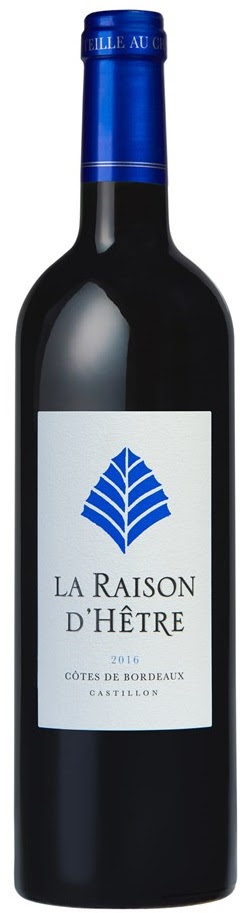
La Raison d’Hêtre (Castillon Côtes de Bordeaux 2017)
Special Price: $119/6-pack (~$20/bottle) OUT OF STOCK

La Raison d’Hêtre is 100% Merlot produced from vines around 20 years of age on the lower slopes of the plateau. Vinification takes place in temperature controlled concrete vats and the wine is aged for about 15 months in oak barrels (50% one-year, 50% two-year). Raison d’Hêtre is lighter in body, as you would expect of a second wine. The fruit leans a little more red and bright, suggesting this wine might be a perfect partner to pizza and general merrymaking — its raison d’être, if you will.

Posted on Leave a comment

New Vintage of Châteauneuf-du-Pape’s Finest Terroir + A Poundable Côtes-du-Rhône

Situated in the heart of the village of Châteauneuf-du-Pape, the vineyard Clos Saint Patrice has an unhindered view of the famous Château of the popes which has dominated the village and its vineyards for almost 800 years. But the great view is not the only thing that makes the vineyard special. As far back as 1838, Clos Saint Patrice was identified as one of the best Châteauneuf-du-Pape vineyards in the directory L’annuaire de Vaucluse.
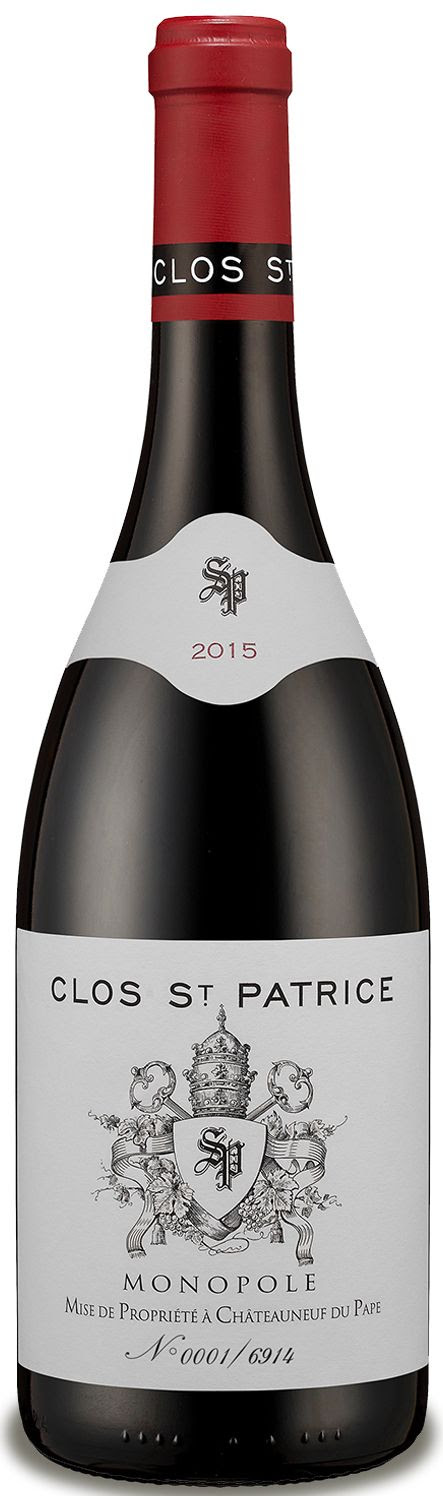
Modest winemakers Guy Jullian and his son Jérôme purchased the Clos in 2009 and thus became the first owners of a monopole in Châteauneuf-du-Pape. In 2014, Samuel Montgermont, winemaker and General Manager at Les Grandes Serres, joined the team. The 2015 vintage was the first produced and it immediately became one of the finest wines of Châteauneuf-du-Pape.

A little over four acres in size, the Clos is located on the appellation’s Villafranchian terrace and enjoys a southerly exposure. The parcel is planted with very old Grenache and Mourvèdre propagated from ancient vines. The soil is made up of rounded silica pebbles above clay and sand colluvial deposits.

It is this marriage of great old vines and unique terroir that gives the wine of Clos Saint Patrice the balance and elegance to stand out as one of Châteauneuf-du-Pape’s best. Indeed, one of the most respected French wine publications, Le Guide des Vins Bettane & Desseauve may have said it best: “This minuscule parcel which very nearly disappeared has risen from its ashes thanks to the efforts of a dynamic team which, from the very first vintage, managed to equal the most elegant wines of the appellation…This is a highly recommendable estate which is unfortunately likely to produce small volumes in comparison to the demand.”

But of course the wine doesn’t make itself. The team tends the vines by hand and according to the principles of organic agriculture. No chemical products are ever applied. In order to obtain an optimum balance they will allow the fruit to hang until phenologically mature. Harvest begins at the end of September for the Grenache and finishes mid-October with the Mourvèdre. In the cellar, maceration and fermentation are done exclusively in concrete tanks. Aging takes place over 14 months in concrete vats and a further 12 months in the bottle.

While benefiting from a generally consistent climate, recent vintages in Châteauneuf-du-Pape have been quite different. 2015 was generous in all regards: color, structure, ripeness, and even quantity. In 2017, frost, then rain, and then heat, made for a harvest that was early and small, resulting in marked concentration. But it is 2016 that is being heralded as one of the finest vintages in the past few decades, with some winemakers even comparing it to the epic 1990 vintage. Warm conditions throughout 2016, along with reduced yields, has resulted in wines of superb concentration.

Special prices based on purchase of 6-pack (mix-and-match).


$144 Domaine Saint Patrice “Clos Saint Patrice” (Châteauneuf-du-Pape 2016)
$315 en Magnum

Samuel Montgermont likes to inform people that the Clos Saint Patrice vineyard is the exact same size as Romanée-Conti. The comparison to great red Burgundy doesn’t end there. A blend of Grenache and Mourvèdre, Clos Saint Patrice has all the finesse and balance you expect from a world-class wine. Notes of dried flowers and fennel-heavy herbes de Provence rise above a rich cherry fruit essence. A sip fills the mouth with luscious, sappy red fruits to move on to a silky mid-palate and everlasting mineral finish. With tension and elegance to spare, Clos Saint Patrice will likely reward a drinker over the next couple of decades, or longer.


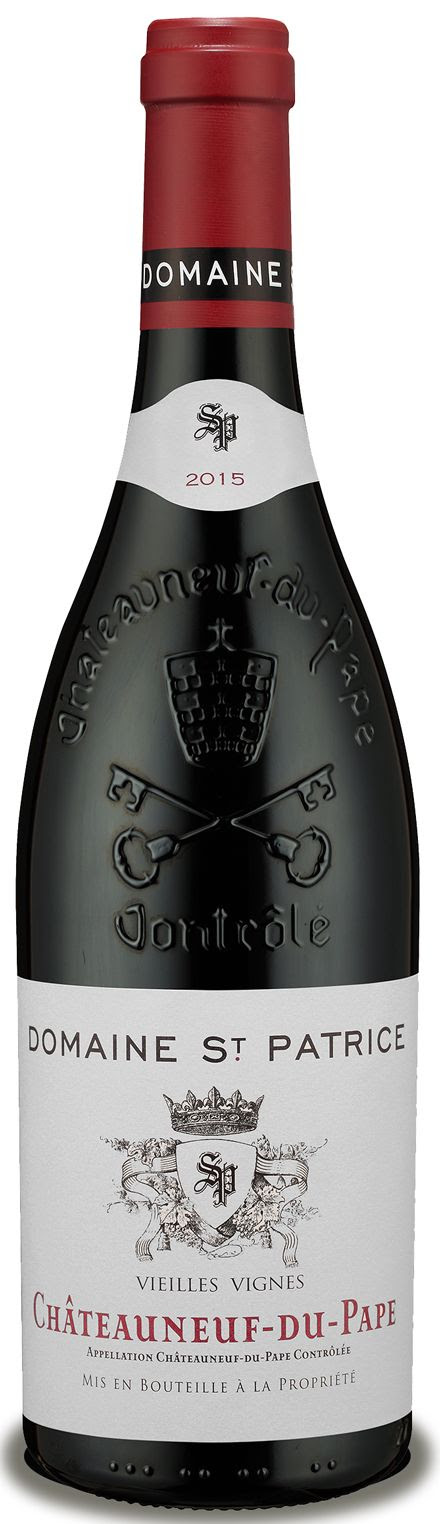
~$53 Domaine Saint Patrice “Vieilles Vignes” (Châteauneuf-du-Pape 2016)
The unique character of Domaine Saint Patrice’s “Vieilles Vignes” Châteauneuf-du-Pape comes from the diversity of its terroirs. The wine is a blend of Grenache, Mourvèdre, and Syrah from multiple plots: La Bertaude, Bois-Lauzon, Cabrières d’Orange, Cabrières de Châteauneuf-du Pape, Bois-Dauphin, Le Pied Long, Les Bousquets, Les Terres Blanches, Les Marines, and Les Galimardes. In the cellar, maceration and fermentation are done in concrete tanks. Aging takes place over 14 months in concrete vats, large oak foudre, half-muids, and barrique with a further 12 months after bottling. On the nose are luscious red and black fruits with a hint of kirsch beneath warm terracotta and mint. A sip is simultaneously ripe and pulsing with wiry energy. Drink now or over the course of the next decade, especially with lamb and rosemary.


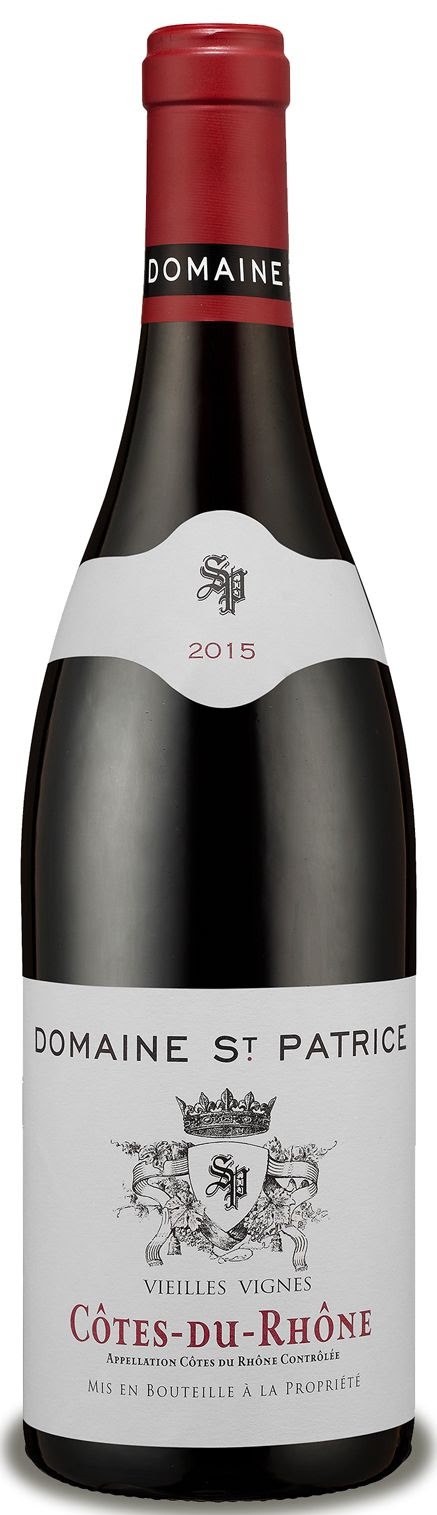
~$16 Domaine Saint Patrice “Vieilles Vignes” (Côtes-du-Rhône 2016)

A wine to stock up on, Domaine Saint Patrice “Vieilles Vignes” Côtes-du-Rhône is boisterously fruity in aromatics and flavor with some clean earth and a hint of herbs. A sip is downright poundable, juicy, with a finish that extends far beyond its reasonable price. It has all the elements one looks for in the type. The attractive price is just the cherry on top. It is a blend of Grenache, Mourvèdre, and Syrah from three plots: Les Champauvins, Le Coudoulet, and Boisfeuillet. In the cellar, maceration and fermentation are done in concrete tanks. Aging takes place over 14 months in concrete vats and large oak foudre with a further 12 months after bottling.