Posted on Leave a comment

Southern Rhône Riches: Châteauneuf-du-Pape’s Sister Cru Villages (10-Bottle Wine-Pack $325, All Included)

Châteauneuf-du-Pape is quite often the gateway region that introduces curious wine drinkers to the essence of terroir. An almost perfect union of soils, climate, and grape varieties combine to create one of the world’s great red wines that tends to be expressive from youth to maturity, with an exuberance and sophistication rarely matched. The next best thing to a great Châteauneuf-du-Pape is a less expensive, yet superb bottle of Southern Rhône red wine from nearby appellations that costs a fraction compared to its more prominent cousin.
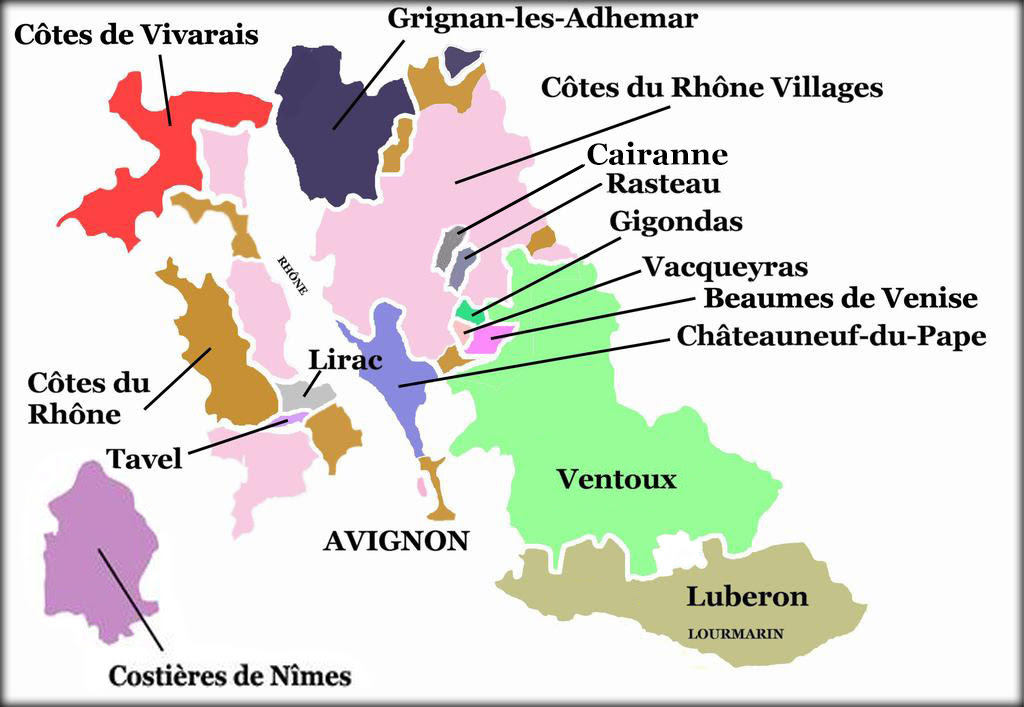
The Rhône River stretches from the Alps to the Mediterranean through an incredibly diverse expanse. At its southern end, between the cities of Vienne and Avignon, rolling hills meet plateaus of varying elevation under the toasty Mediterranean sun. Long, warm summers and mild winters allow the region’s dominant grape variety, Grenache, to yield good concentration via stony soils and low rainfall. This is the region of France’s most user-friendly wines.

We are pleased to offer a box of easy-drinking yet refined red wines from Châteauneuf-du-Pape’s sister Cru villages. These are wines with a warmth ideal for pairing with hearty meals and cold winter nights. The appellations of Cairanne, Gigondas, Lirac, Rasteau, and Vacqueyras are all capable of producing wines of superior quality that often rival their more celebrated neighbor, and are made with similar strict and rigorous regulations.

Included in Southern Rhône Riches 10-Bottle Package are two each of the following wines:

The price includes a 15% discount, tax, and delivery. We will also honor a 10% discount on any bottles you might wish to add to the package.
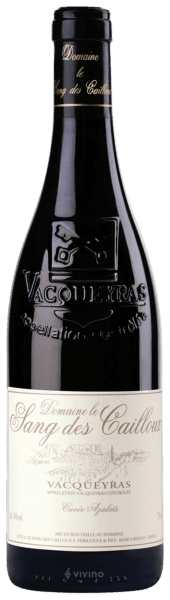
Vacqueyras

The second Côtes du Rhônes Villages to be upgraded to Cru status and a stone’s throw across Vaucluse from the famed vineyards of Châteauneuf-du-Pape, Vacqueyras sits beneath the jagged, lacy peaks of the Dentelles de Montmirail rising up in the east. 70% Grenache, 20% Syrah, 10% Mourvèdre and Cinsault, Serge Férigoule’s Domaine Le Sang des Cailloux 2018 (Regular $45) is easily one of the best of the type. The fruit is organically farmed on the great Plateau des Garrigues, where red clay, limestone, and the famous galets roulés, or rounded stones, impart an intensity and depth to the wines. The wine is dark, rich, full-flavored, wild and chewy, with notes of leather, spicy garrigue, and smoky, black fruit.
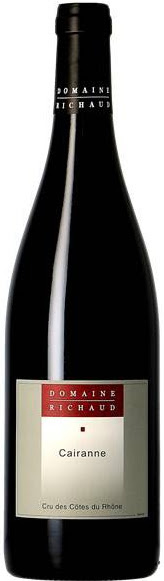
Cairanne

Cairanne (elevated to cru status in 2016) is perhaps the most promising and exciting subregion in Southern Rhône today. The village is situated atop a range of low hills with ideal exposure. It’s elevation ensures slightly cooler temperatures than much of the region and lends a brightness and delicacy to the wine. Marcel Richaud’s Domaine Richaud 2018 (Regular $37) is an organically certified cuvée that aims to express the village’s terroir from soils of poor, stony clay-limestone on mid-slope plots. A blend of Grenache, Syrah, Mourvèdre, and Carignan from 40 to 70-year-old vines, the wine is fermented and aged primarily in concrete tanks, with a portion in oak barrels, then bottled unfined and unfiltered with only a small amount of sulfites. The result is a wine that is both rich and electric, with complex aromas of fruit (both fresh and preserved) and herbal spice. A sip fills the mouth with ripe berries and licorice riding a mineral spine.
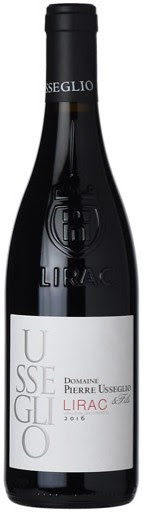
Lirac

Situated in the low-lying hills on the right bank of the Rhône River directly across from Châteauneuf-du-Pape, Lirac reds are elegant, well-balanced, and structured. Domaine Pierre Usseglio, now run by his sons, Jean-Pierre and Thierry, has risen to such prominence over the past two decades, it must be considered as not only one of the top addresses in Southern Rhône but in all of France. Domaine Pierre Usseglio 2018 (Regular $37) is a blend of 60% Grenache, 15% Syrah, 15% Mourvèdre, and 10% Cinsault from clay and pebble soils. The vines are around forty years old. The wine is aged in concrete vats and demi-muids over a period of 12 months to produce a sturdy, solidly built drink loaded with notes of plum, cola and spice. It’s full-bodied, finishing warm and velvety.
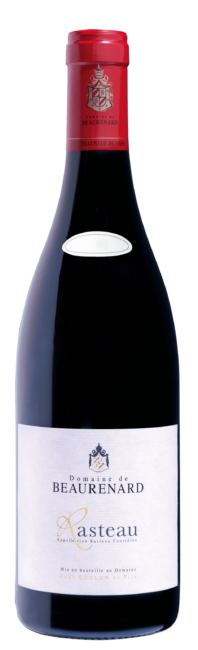
Rasteau

The village of Rasteau was awarded cru status way back in 1944 for their sweet, Vin Doux Naturel. It took a little longer to see the hard work and determination of the region’s vignerons to be awarded cru status for their deeply-colored, robust, dry red wines but now the appellation is considered one of Southern Rhône’s best. Traditional winemakers Daniel and Frédéric Coulon hold around 60 acres in the Rasteau appellation. All of Domaine de Beaurenard’s vines are certified biodynamic. In the vineyards, these methods involve working the soil without herbicides, spreading carefully-dynamised manure, and maintaining sensible grass cover. Domaine de Beaurenard 2017 (Regular $32) is all herbal and red cherries. A blend of 80% Grenache, 17% Syrah, and 3% Mourvèdre, it’s medium to full-bodied, creamy and supple.
Gigondas

Gigondas is the first Côtes du Rhônes Villages to be upgraded to Cru status (1971). It borders Vacqueryas to the northeast and lies within the protection of the toothy, lacy, and majestic rock faces of the Dentelles de Montmirail. Think of it as Châteauneuf-du-Pape from higher, rockier ground. A blend of 80% Grenache and 20% Syrah, Pierre Amadieu “Romane Machotte” 2018 (Regular $30) comes from vines averaging 45 years old growing in alternating Cretaceous limestone and marl soils with a northwest exposure at an altitude of almost 1,000 feet. It ages 12 months in oak foudres and barrels. Berry salad flavors are enveloped in soft yet powerful tannins, mingling with scents of Provençal wild herbs.
Posted on Leave a comment

Fanfare for the Uncommon Varieties: El Dorado in Galicia’s Ribeiro Region (6-Bottle Wine-Pack $190, All Included)

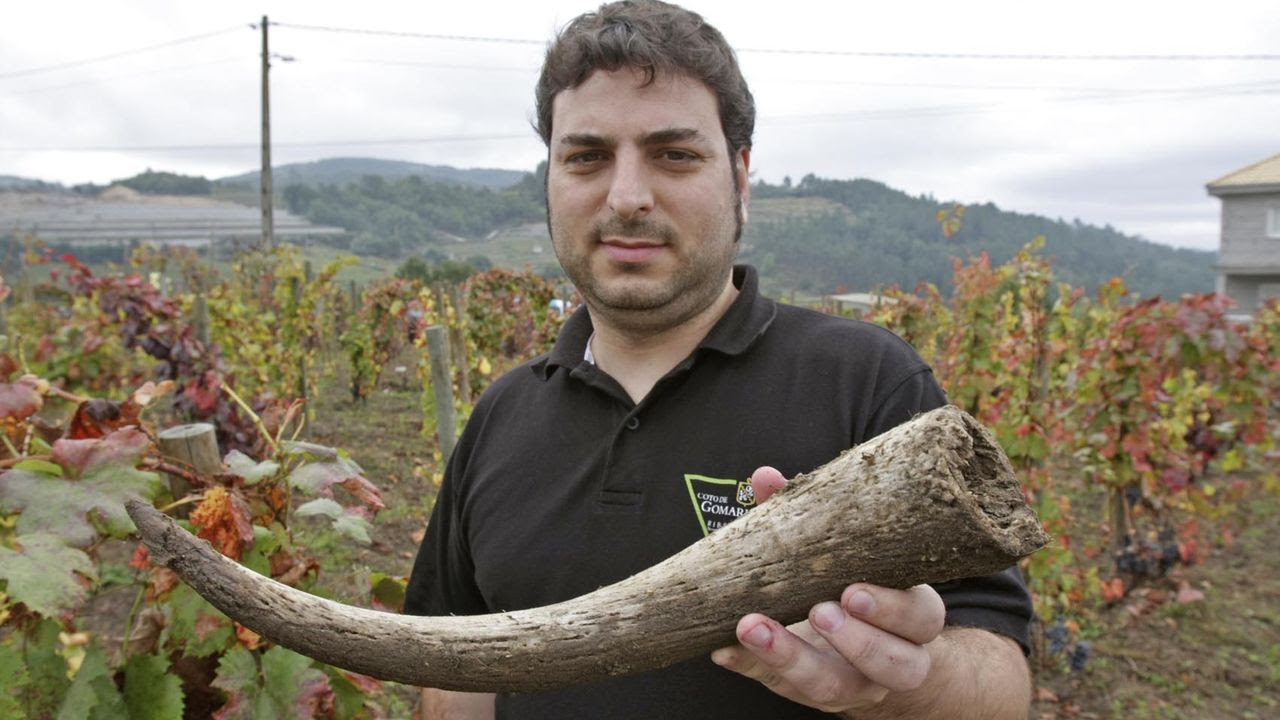
The northwestern Spanish wine production zone of Ribeiro is undergoing a renaissance. One of the vanguard producers of this movement is the Bodega of Coto de Gomariz located in the Avia valley in the autonomous community of Galicia. A unique microclimate that is influenced by both Atlantic and Continental factors allows the region’s native grapes to fully ripen and develop a floral, aromatic complexity while keeping the mouthwatering freshness that Galician wines are known for.

Galicia is one of the few oceanic climate production zones with a wealth of native grapes used in their wine. These varieties are so well-suited to their unique environment you rarely see them used elsewhere. Indeed, you’re likely never going to see a supermarket sign pointing you to the huge selection of Sousón or Ferrol-based wines. Because of Galicia’s landscape of mountains and sea, the cuisine is broad and diverse. As such, the region’s wines pair well with a myriad of dishes, from fish to fowl to filet.

Coto de Gomariz was created in 1978 by the Carreiro family. They began the area’s resurgence by recovering a vineyard that Cistercian monks had established in the 10th century. Today, they own close to 70 acres of vineyards. Coto de Gomariz winemaker Xosé Lois Sebio is one of the most admired and exciting names in Ribeiro. He employs both organic and biodynamic viticulture practices in the vineyards and all wines are fermented with indigenous yeasts.
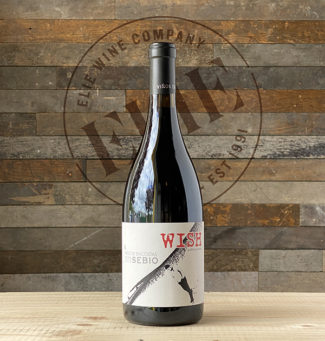
Shisteous, granitic, and sandy soils, steep slopes, tiny yields, a unique microclimate, and the farming of the native red and white grapes of the region has allowed Coto de Gomariz to produce some of the most distinctive and expressive wines in Ribeiro.

Included in the Fanfare for the Uncommon Varieties 6-Bottle Package are one each of the following wines:

Price includes a 10% discount plus tax and delivery. We will also honor a 10% discount on any bottles you might wish to add to the package.


Sebio Wish, (Galicia 2016) RED, Regular Price: $43

Made only during warm vintages, “Wish” is a tribute to the pioneering post-punk band The Cure, who accompanied Xosé Lois Sebio through his youth. It is also named after the aspiration to make a single wine with fruit from very old strains growing on a plot at the limit of Ribeiro on the steep, terraced Penelas slope oriented to the northwest. This plot is always last to be picked, yet in warm years it produces a wine of fresh, floral, and fruity intensity reminiscent of Côte Rôtie. A blend of 50% Ferrol, 35% Caiño Longo, 10% Sousón, and 5% Bastardo fermented with indigenous yeasts and aged for 14 months in French Oak barrels for a wine with gorgeous aromatics of lilac, high-toned fruit, and distinct minerality. Only 94 cases produced.
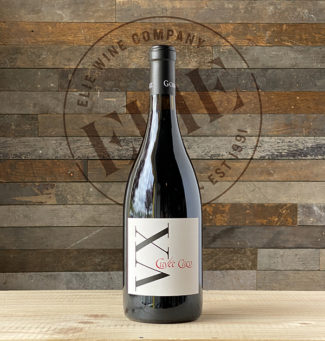
 

VX Cuvee Caco (Ribeiro 2015) RED, Regular Price: $41

VX or “experimental wine” was the name written on the first barrels aged at Coto de Gomariz, and Caco is the nick-name of Ricardo Carreiro´s father. It is a blend of 50% Sousón, 30% Caiño Longo and Caiño da Terra, 15% Carabuñeira, and 5% Mencía from the “A Ferreira” estate vineyard re-planted with local varietals in 1994. Fermented with native yeasts and aged for 20 months in new French 500 liter oak barrels. Fragrant spiced dark berries and licorice on the nose precedes a sip that offers depth and focus with a hint of vanilla and framed by supple tannins. Only 208 cases produced.


Abadía de Coto de Gomariz (Ribeiro 2017) RED, Regular Price: $28

Abadía de Gomariz is a blend of 50% Sousón, 25% Brancellao, 20% Ferrol, and 5% Mencía from the village of Gomariz where soils are granitic with schist and clay. Though fermented in stainless steel, the wine is aged for one year in 500-liter used oak barrels, mostly of French origin, to tame some of the hairy tannins that Sousón can exhibit. A sip is juicy little forest berries with a long and winding cherry pit finish. On the nose, the berry fruit is sweeter with hints of licorice and cream. On the label is the coat of arms of the Abbey Gomariz — the oldest civil building for winemaking in the Iberian Peninsula. Only 1,600 cases produced.
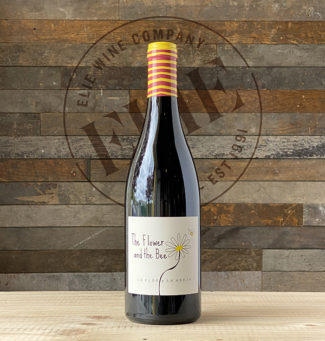
 

“The Flower and the Bee” (Ribeiro 2018) RED, Regular Price: $20

This miniscule production everyday red comes from younger Gomariz vineyards planted with the native variety Sousón in mostly granitic soils. Fermented with native yeasts and aged for 4 months in barrel, this wine is the entry level of Gomariz, yet expresses the same identity of the Avia Valley terroirs as its more ambitious siblings. It’s a versatile wine full of ripe dark berry aromas with a pinch of herbs and spice and a bright finish. The lively label represents both the origin of vine fertilization, as well as the estate’s respect for nature. Only 1,250 cases produced.
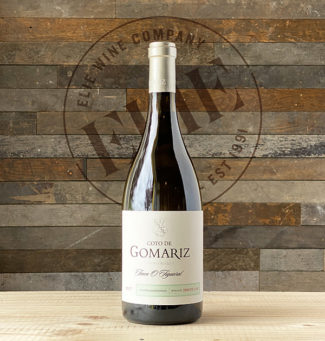
 

Finca O Figueiral (Ribeiro 2017) WHITE, Regular Price: $37

70% Treixadura, 10% Godello, 10% Lado, 5% Loureira, and 5% Albariño from the single estate vineyard “O Figueiral” in Gomariz grafted with local grape varieties in 1978. The terroir is mostly clay with a subsoil of schist. Free-run juice begins fermentation in stainless steel vats and finishes in new 500 liter French Oak barrels. It is then aged over fine-lees for 10 months with periodic battonage to build body while maintaining balance. Melon, peach, and tangerine aromas with floral overtones precede a stony and precise, lush yet lively wine. Only 275 cases produced.
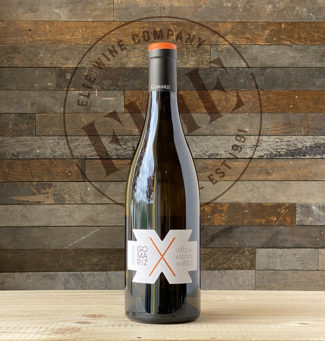
 

“X” (Ribeiro 2019) WHITE, Regular Price: $30

“X” is a blend of 95% Albariño and 5% Treixadura named after the schist soils (xisto in Gallego) where the grapes are grown. This single vineyard wine comes from fruit grown in the “As Penelas” plot. Free-run juice is fermented with native yeasts and then aged in stainless steel vats. Aromas of yellow fruit and honey with a touch of lemon pith precede a fleshy mid-palate, offering vibrant citrus and orchard fruit flavors braced by juicy acidity and a finish of nervy minerality. This is the kind of white wine that will please just about everyone. Only 400 cases produced.
 

Posted on Leave a comment

Merlot Glory: The Bounty of Bordeaux’s Backcountry (6-Bottle Pack for $195, or 12-Bottle Pack for $365, All Included)

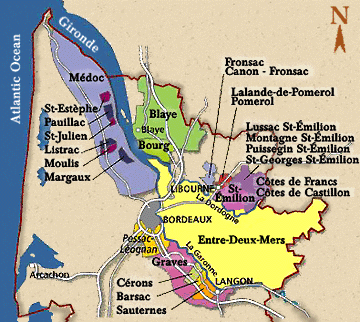
A grape variety born in Bordeaux, Merlot often gets a bad rap due to the glut of simple, fruity wines that bear its name lined up on party store shelves. But when the soils and climate are ideal, and production is focused on quality, the variety is capable of making some of the most expressive wines in the world. Situated on the north side of the Dordogne River near the city of Libourne, the soils of mainly clay and limestone that cover the “Right Bank” Bordeaux appellations of Pomerol and Saint Émilion are capable of producing wines that reveal the complete range of the Merlot variety and are the reference points for the rest of the world.
While many of the wines of Pomerol and Saint Émilion are out of reach for the typical consumer, the entire area known as the Right Bank offers excellent quality and value through the important satellite appellations surrounding them. These often overlooked appellations produce wines with similar characteristics as the big two, with many of the top producer’s efforts surpassing expectations. We’re pleased to offer this boxful of wines illustrating the sublime characteristics of Merlot from its birthplace terroir.

Included in Merlot Glory: The Bounty of Bordeaux’s Backcountry 6-Bottle Package are one each of the following wines, two bottles of each wine (and a deeper discount) will be included in the 12-bottle package:

The discounted price includes tax and delivery. We will also honor a 10% discount on any bottles you might wish to add to the package.

Lalande de Pomerol

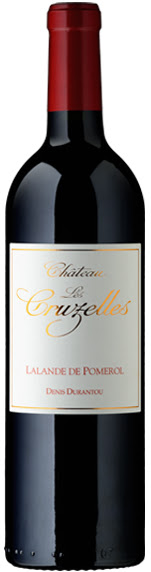
Lalande de Pomerol produces reds that, at their best, mimic Pomerol’s robust, earthy flavors at a fraction of the price. While there is more variation in terroir within the two appellations than between them, Lalande tends to have more gravel and sand compared to Pomerol’s heavier clay soils. Château Les Cruzelles 2016 (Regular $45) is an ample wine from perfectionist proprietor Denis Durantou, who is known for his celebrated Pomerol estate Château l’Eglise Clinet that is less than a mile away. A blend of 60% Merlot and 40% Cabernet Franc, it’s a hearty wine full of black raspberries, dark and juicy plums, and hints of cocoa and floral accents.

Castillon – Côtes de Bordeaux

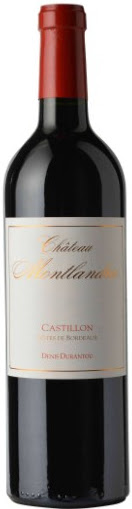
Next-door neighbor Saint-Émilion has had a huge influence on Castillon. Saint-Émilion growers and chateau owners have taken advantage of lower-vineyard prices in Castillion to produce serious Saint-Émilion-style wines for a fraction of Saint-Émilion prices. Another beautiful bottle from star winemaker Denis Durantou of Château l’Eglise Clinet is Château Montlandrie 2016 (Regular $42). A blend of 65% Merlot, 20% Cabernet Franc, and 15% Cabernet Sauvignon, from terroir of clay and limestone soils on the plateau of Cotes de Castillon. Fresh herbs, dark cherry and floral notes precede cherry liqueur, licorice, and spice that meld well with its ripe, elegant style.

Francs – Côtes de Bordeaux

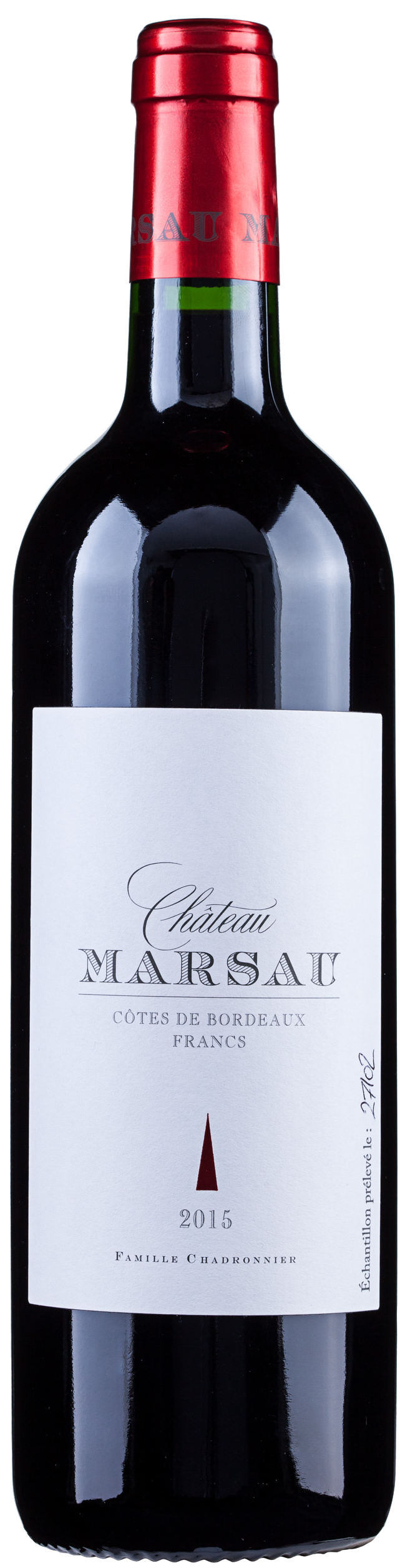
Closer to Bergerac than the city of Bordeaux, Francs is a small jewel located next to Castillon. It is the smallest and most rural region at a little over 1,000 acres. 100% Merlot, Château Marsau 2016 (Regular $35) comes from vineyards with a terroir of clay, limestone and sandy soils. The vineyard is well situated on a slope that is close to the peak of the appellation’s plateau with an elevation of over 300 feet. The vines are on average 35 years of age. The wines are aged in 30% new, French oak barrels for 12 months before bottling to produce a wine of depth, tannin, roundness and plenty of ripe, smoky black cherries and plummy fruit from start to finish.

Fronsac

The appellation of Fronsac is another of Bordeaux’s lesser known winemaking regions. It is an area of back-country roads and tiny vineyards a stone’s throw from Pomerol and Saint-Émilion. Indeed, Fronsac is five times smaller than Saint-Émilion, with a more homogenous terroir of limestone and clay — “Fronsac molasses” it’s sometimes called by the grape farmers that toil its vineyards. In the right hands, wines made in Fronsac can be as good as many of the wines from its big-name neighbors. Château Clos du Roy 2018 (Regular $25) is one of them. 90% Merlot, 5% Cabernet Franc, and 5% Cabernet Sauvignon aged in 30% new, French oak barrels for 12 months produce a balanced wine full of fresh fruit, juicy acidity, and muscular tannin.

Montagne Saint-Émilion

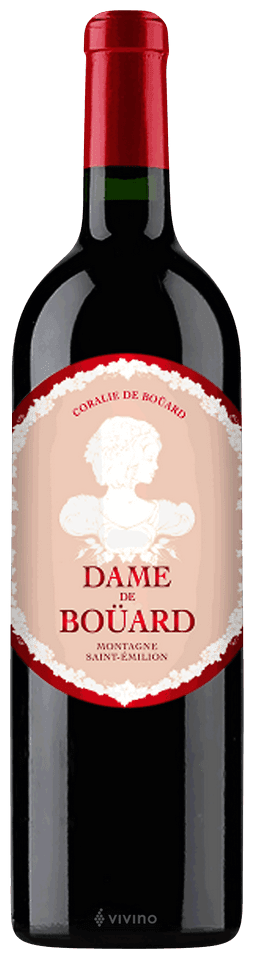
Montagne-Saint-Émilion is the largest of the Saint Émilion satellite villages, and many consider it the best. It is also the location of one of France’s top viticultural research colleges. Clos de Boüard is the newest project for Coralie de Boüard, owner of La Fleur de Boüard in the Lalande de Pomerol appellation, and daughter of Hubert de Boüard of the famous Château Angelus. The estate’s vines are an average of 35 years old. They also have very old vines that range from 60 to 70 years of age. Château Clos de Boüard “Dame de Boüard” 2018 (Regular $24) is the second wine of Clos de Boüard and a blend of 60% Merlot, 30% Cabernet Franc, and 10% Cabernet Sauvignon. Fresh, bright fruits, chocolate and licorice work together perfectly in this forward, open, and easy to drink wine.

Blaye – Côtes de Bordeaux

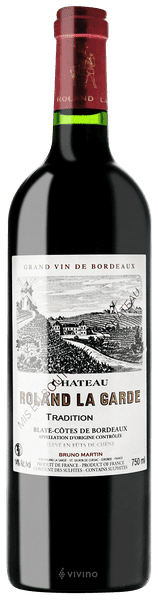
Blaye was an important river port in Roman times, and today, the Citadel of Blaye is a UNESCO World Heritage Site. It is a source of lovely and accessible red wines, driven by fresh fruit. Biodynamically cultivated since 2008 by nature-loving winemaker, Bruno Martin, Château Roland La Garde “Tradition” 2016 (Regular $23) is a blend of 80% Merlot and 20% Cabernet Sauvignon from vines 20 years old grown in clay and limestone soils. Two-thirds of the wine ages in barrels while one-third ages in vat for 12 months. It is a wine with finesse and harmony, good balance, and a tannic structure that highlight the aromas of red fruits.

Posted on Leave a comment

RED FRIDAY – 15% OFF BURGUNDY! – (3, 6, or 12-pack, Name Your Price and We Will Suggest the Selection and Deliver for Free)

Burgundy is much more than Pinot Noir and Chardonnay from France, it’s a winemaking region with more classified geological complexity and nuance than any other in the world. And Elie Wine Company is not an average wine shop, because we keep wine from the best vintages to develop in our temperature controlled shop. Indeed, our selection of Burgundy is deeper in appellations and vintages than most wine shops in Burgundy itself.

One of the most remarkable aspects about the Burgundy region is the breadth of different expressions that can be derived from two grape varieties. We have prime examples of everything from inexpensive regional wines to the inimitable Grand Crus of Montrachet and the Côte de Nuits.
While we are very proud of the fact that we carry some of the greatest and most compelling bottles from one of the world’s most celebrated regions, we couldn’t do it without your support. One of the most satisfying aspects of our business is sharing the history, geography, and producer’s stories. It’s customers like you that allow us that opportunity.

To show our gratitude we’re offering a 15% discount on all wines from the Burgundy region, Friday only. Let us know what you want to spend and we’ll put together a great package of Burgundy for you to enjoy over the holidays. As always, we can deliver it to your doorstep for free (within a reasonable distance of our shop) and leave it there for you to bring in at your convenience.


Value Burgundy

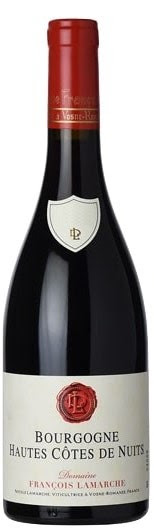
Wines from great producers with vineyards in lesser appellations are the lowest priced yet highest-quality entry point into the world of Burgundy. There might not be a better wine to pair with all the foods at a holiday table than the Pinot Noir and Gamay blend of Robert Chevillon’s Passetoutgrain 2017 ($27)Gachot-Monot’s Côte de Nuits-Villages 2018 ($29) is a deeply colored, highly aromatic, full and complex Côtes de Nuits Villages that tastes more like Nuits-St-Georges than village Burgundy. Pierre Bart’s Marsannay “Les Echezots” 2016 ($34) is a customer favorite while Nicole Lamarche’s Hautes Côtes-de-Nuits 2015 ($33) speaks of the pedigree of her Vosne-Romanée estate. There is even value to be had at the Premier Cru level with François Lummp’s Givry Premier Cru “A Vigne Rouge” 2015 ($43). The list goes on…


The Slopes of Côte d’Or

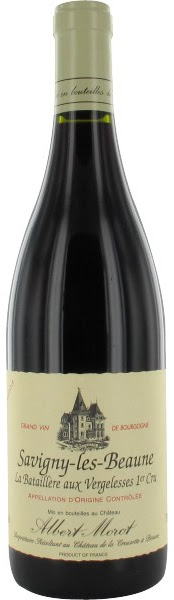
In Burgundy, geography is the major factor in the hierarchy of the region’s wines. In the right vigneron’s hands, the patchwork appellations on the slopes of Côtes de Nuits and Côtes de Beaune can produce exhilarating wines with a clear sense of place, from the rich, juicy fruit of Savigny-lès-Beaune, to the broad-shouldered Gevrey-Chambertin, and everything in-between. Here are but a few examples: Vincent Rapet’s Beaune Premier Cru “Clos du Roi” 2014 ($46), Geoffroy Choppin with Albert Morot’s Savigny-lès-Beaune Premier Cru Bataillère 2016 ($47), Vincent Girardin’s old vines parcel in Chassagne-Montrachet 2017 ($50), Paul and his sons, Paul and Michel, with Paul Pernot’s Beaune “Clos des Teurons” 2015 ($55), Stéphane Magnien’s “Aux Petites Noix” Morey-St-Denis Premier Cru ($55), Vincent Mongeard-Mugneret’s old vines parcel in Fixin 2017 ($59), Florence and Simon Heresztyn-Mazzini’s old vines Gevrey-Chambertin 2014 ($64), the list goes on…


The Premiers Crus of Côte d’Or

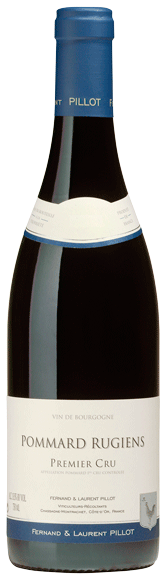
Centuries of experience have enabled growers to establish the widely accepted hierarchy of superior terroir in Burgundy. Some of the region’s greatest and most concentrated wines come from single vineyard parcels known as Premier Crus, or “1er Crus.” At only a fraction of the zone’s production, these are some of the most desirable wines in the world. You can expect even more of Burgundy’s charm in the Premiers Crus from Maurice Chapuis’s Aloxe-Corton 2015 ($71), Sébastien Odoul-Coquard’s Chambolle-Musigny “Les Baudes” 2014 ($81), Rodolphe Demougeot’s Pommard “Charmots” 2015 ($84), Fernand & Laurent Pillot’s Pommard “Rugiens” 2012 ($99), Richard Manière’s Nuits-St-Georges “Les Damodes” 2014 ($93), Dominique Gallois’ Gevrey-Chambertin “La Combe aux Moines” 2014 ($99), the list goes on…and we haven’t even told you about our vast selection of Grands Crus.

Posted on Leave a comment

Half-a-Dozen Wines to Pour on Thanksgiving Day (12-pack for $280 All-Included)

G.K. Chesterton wrote, “I would maintain that thanks are the highest form of thought; and that gratitude is happiness doubled by wonder.”

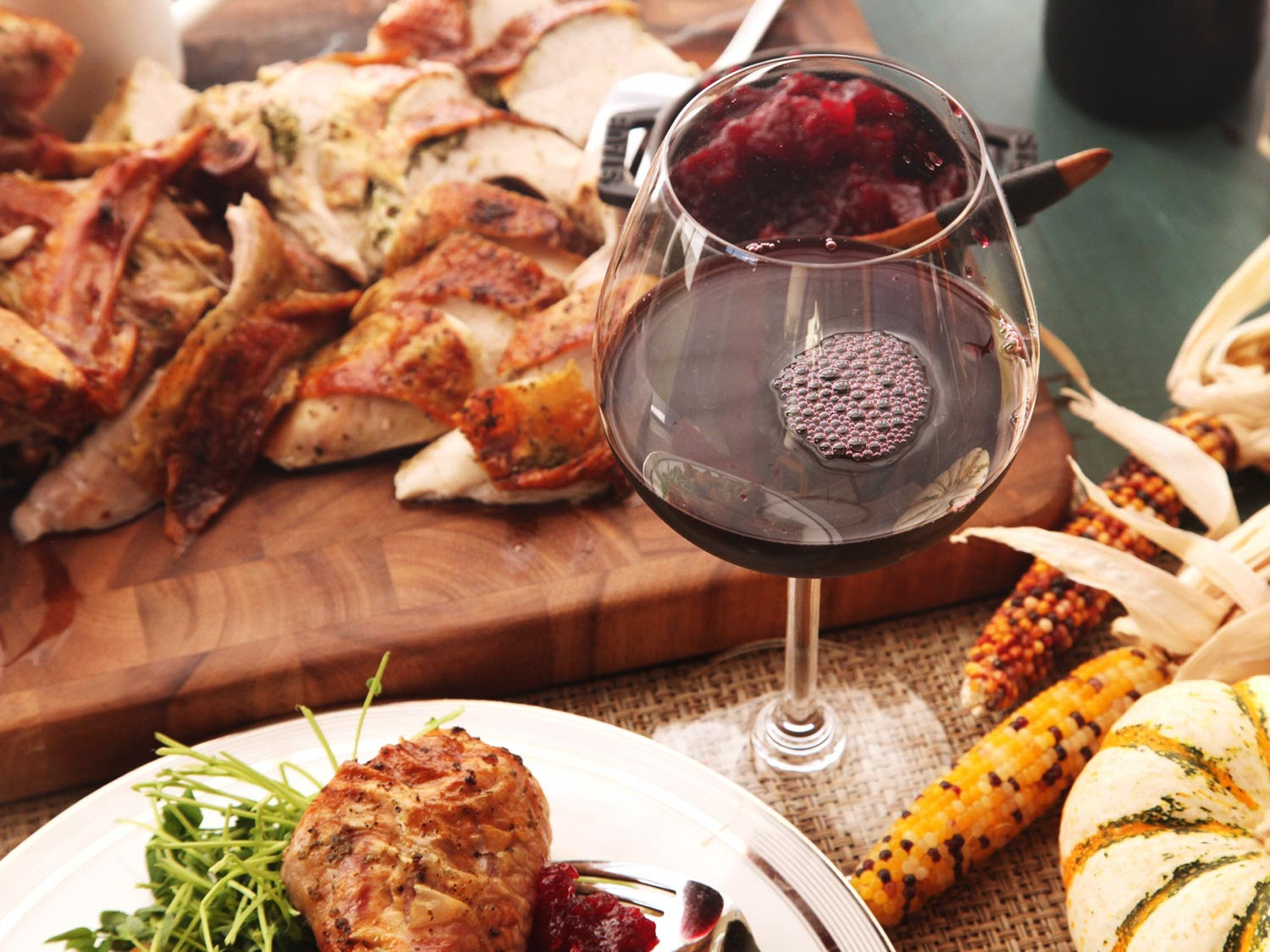
Despite (or perhaps because of) the tumult of 2020, we can probably all find something to be thankful for this year. Whether it be health, family, a meaningful life, or just a substantial supply of toilet paper, why not celebrate with a box of tasty wine especially selected to pair with the season’s feast?

The typical Thanksgiving meal is far too diverse with textures, flavors and aromas to labor over perfect pairings. The most important characteristics of the wines on your table is that they are light, refreshing, energetic, with moderate alcohol, lots of fruit, a lively acidity, and versatile.
We’ve selected a list of wines that will enhance any holiday feast: white wines abundant with fruit and freshness, and reds that aren’t too tannic or heavy. You don’t want anything too bold that might become cumbersome and overpower many of the dishes. Best of all, these are all wines that drink well before, during, and after the meal, so there’s no need to get all fussy about what’s getting poured.

Half-a-Dozen Wines to Pour on Thanksgiving Day (12-pack for $280 All-Included)

This 12-Pack contains two bottles of each wine. The price includes tax and delivery, as well as a discount of nearly 15% off the regular price. We will also honor a 10% discount on any bottles you might wish to add to your order.

As usual, we can deliver to your doorstep for free (within a reasonable distance of our shop) and leave it there for you to bring in at your convenience, including on Thanksgiving Day.


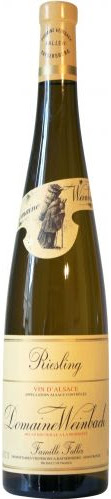
Domaine Weinbach Riesling (Alsace 2018) Regular Price: $33, WHITE
Domaine Weinbach lies at the foot of the majestic Grand Cru of Schlossberg hill and has been planted with vines since the Ninth Century. A family run estate since 1898, they produce an exquisite range of wines. Domaine Weinbach started farming biodynamically in 1998 and were certified in 2010. With a focus on purity and terroir expression, the wines are made in old oak vats with indigenous yeasts. This is the epitome of Alsace Riesling, dry, rich, concentrated, and intoxicatingly fragrant. A glass is juicy, vivid, ripe and fresh, with a stony finish that speaks deeply of the land.


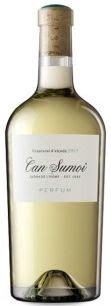
Can Sumoi “Perfum” (Penedès 2019) Regular Price: $25, WHITE 
Can Sumoi is a new project from Pepe Raventós and Francesc Escala to create vibrant wines from the mountains of the Baix Penedès in the Catalunya region of northeastern Spain. True to its name, “Perfum” exudes a heady mix of aromatics, primarily floral notes of jasmine and rose, although there is an abundance of orchard fruit as well. A sip leads with citrus that turns to soft, ripe apples on the midpalate. All that fruit rides a wave of juicy acidity all the way to the finish. The wine is a blend of 50% Moscatel, 30% Macabeo, and 20% Parellada. Although vinified completely dry, the Moscatel (Muscat) variety contributes much of its aromatic character to this wine. Bottled without additives or filtering.


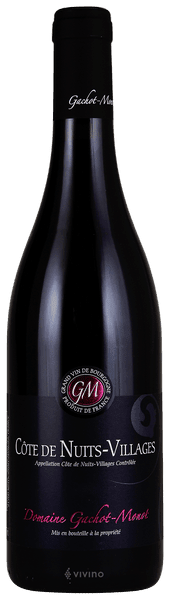
Domaine Gachot-Monot (Côte de Nuits-Villages 2018) Regular Price: $34, RED
Fifth-generation vigneron Damien Gachot and his Danish wife, Lise, farm about 30 acres in the village of Corgoloin, in between Nuits-Saint-Georges and Beaune. He has harnessed the ability to balance traditional vineyard management and respect of terroir with more contemporary methodologies in the cellar. His wines are some of the best values in Burgundy. 100% Pinot Noir from vines 40 to 45 years old growing in clay and limestone soils, this is a deeply colored, highly aromatic, full and complex Côtes de Nuits Villages that tastes more like Nuits-St-Georges than village Burgundy.


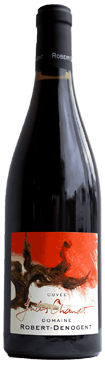
Domaine Robert-Denogent “Jules Chauvet” (Beaujolais-Villages 2017) Regular Price: $25, RED
“Cuvée Jules Chauvet” is made from a three acre parcel of Gamay vines in a 15 acre vineyard that was owned by the late Jules Chauvet – a legend for his pioneering work with organic viticulture in Beaujolais and his leadership in the French natural wine movement. The wine is made with rigorous sorting in the vineyard and minimal intervention in the cellar and then aged for 16 months in seven-year-old barrels. The aromatics are all strawberries and cinnamon, the telltale of a semi-carbonic maceration process that keeps the wine light and lively. A sip is fresh and bursting with berry fruit, a downright pleasure to drink.


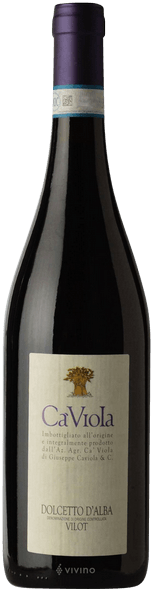
Cà Viola “Vilot” (Dolcette d’Alba 2017) Regular Price: $19, RED 
Giuseppe “Beppe” Caviola is one of the most important oenologists in Italy. Indeed, in 2002, Beppe was named “Enologist of the Year” by the Italian wine industry’s most important guide, Gambero Rosso. Beppe is focused on showcasing the terroir of the Langhe and employs sustainable vineyard and winemaking practices at all times. A traditional Dolcetto, “Vilot” is produced from 20 year old vines growing on the high, steep slopes of Montelupo in soils rich in calcareous clay marl and sandstone. Fresh blackberries lead into a smooth and balanced finish in this classic food wine.


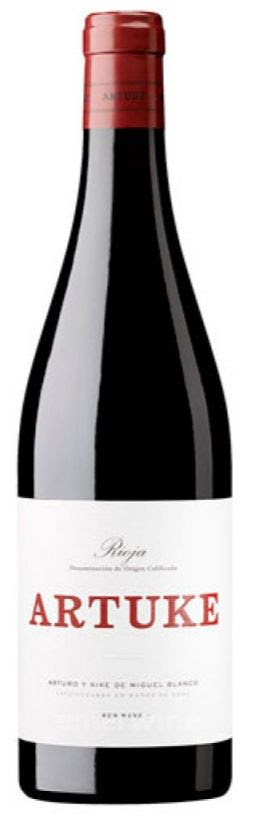
Artuke (Rioja 2019) Regular Price: $17, RED
“Artuke” is made with the carbonic maceration method, a wine-making technique used to enhance aromatics and produce luscious, fresh, fruity wines preferred by Basques in the northern sub-zone of Alavesa. It is a blend of mainly Tempranillo grapes with about 5% of the white grape, Viura, from vineyards in the village of Baños de Ebro. The wine is fermented and aged in concrete for close to six months before bottling. It smells like a four-berry pie. This mouth-watering red wine takes a relatively deep chill which makes it a versatile pairing with pretty much everything on the Thanksgiving table.

Posted on Leave a comment

Champagne Society December 2020 Selection

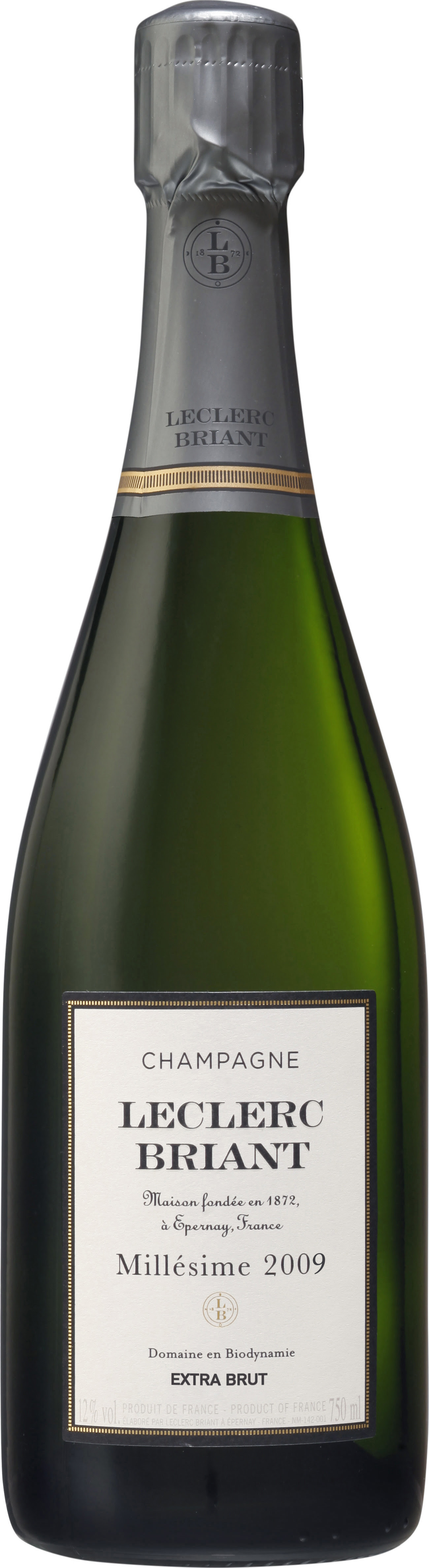
Champagne Leclerc-Briant Millésime 2009 (Extra Brut)
Price for The Champagne Society members: $75, limit 2 bottles

Founded in the village of Cumières in 1872 by Lucien Leclerc, Champagne Leclerc Briant saw five successive generations of Leclercs that were true innovators and who are counted amongst the pioneers of organic and biodynamic viticulture in Champagne. Today, enologist Hervé Jestin continues the legacy of this visionary house.
The estate holds 24 acres of vineyards divided between the Premier Cru villages of Cumières, Hautvillers, Mareuil-sur-Aÿ, Bisseuil in the Vallée de la Marne, Villers-Allerand and Rilly la Montagne in Montagne de Reims and the Grand Cru village of Le Mesnil Sur Oger in the Côte des Blancs. Their holdings also include one tiny plot, called La Croisette, right in the heart of Epernay.

In recent years, the premises have been extensively refurbished and improved with the aim of creating wines of the utmost quality. Their extensive cellars are more than a half of a mile in length and over 100 feet below the surface — ideal for maturing champagne.
Certified biodynamic, Leclerc-Briant Millésime 2009 is produced from 40% Chardonnay; 40% Pinot Noir and 20% Pinot Meunier from the Premiers Crus villages of Hautvillers and Cumières as well as the village of Verneuil located on the right bank of the Marne. The wine was fermented and aged for seven to eight months in stainless steel and cement tanks followed by nearly eight years in bottle before disgorgement in June of 2017 when it received a low dosage of just 4 grams per liter. Only about 800 cases were produced.

Long maturity and the ripe 2009 vintage gives the wine a lushness to balance a brisk low dosage and salty finish. Notes of lemon curd, white flowers, and brioche add to its elegance. A beautiful Champagne inside and out as the label design was inspired by the influential publishing house Éditions Gallimard’s iconic book cover design.

Posted on Leave a comment

Saturday Sips + Saturday Sips Review (6-Pack for $200 All-Included): Châteauneuf-du-Pape, Lirac, Côtes-du-Rhône from Next-Generation Star Estate

Domaine Pierre Usseglio has risen to such prominence over the past two decades, it must be considered as not only one of the top addresses in Chateauneuf-du-Pape but in all of France.

The name Usseglio is well-regarded in the region. It started back in 1949 when Francis Usseglio, after leaving Italy to work the vineyards of Châteauneuf-du-Pape, produced his first vintage. His two sons both made winemaking their life’s work, with Pierre taking over, and expanding, the family estate, while Raymond went on to build his own remarkable winemaking operation. Today, Domaine Pierre Usseglio is run by Pierre’s two sons, Jean-Pierre and Thierry. Clearly, wine runs through the family’s veins.
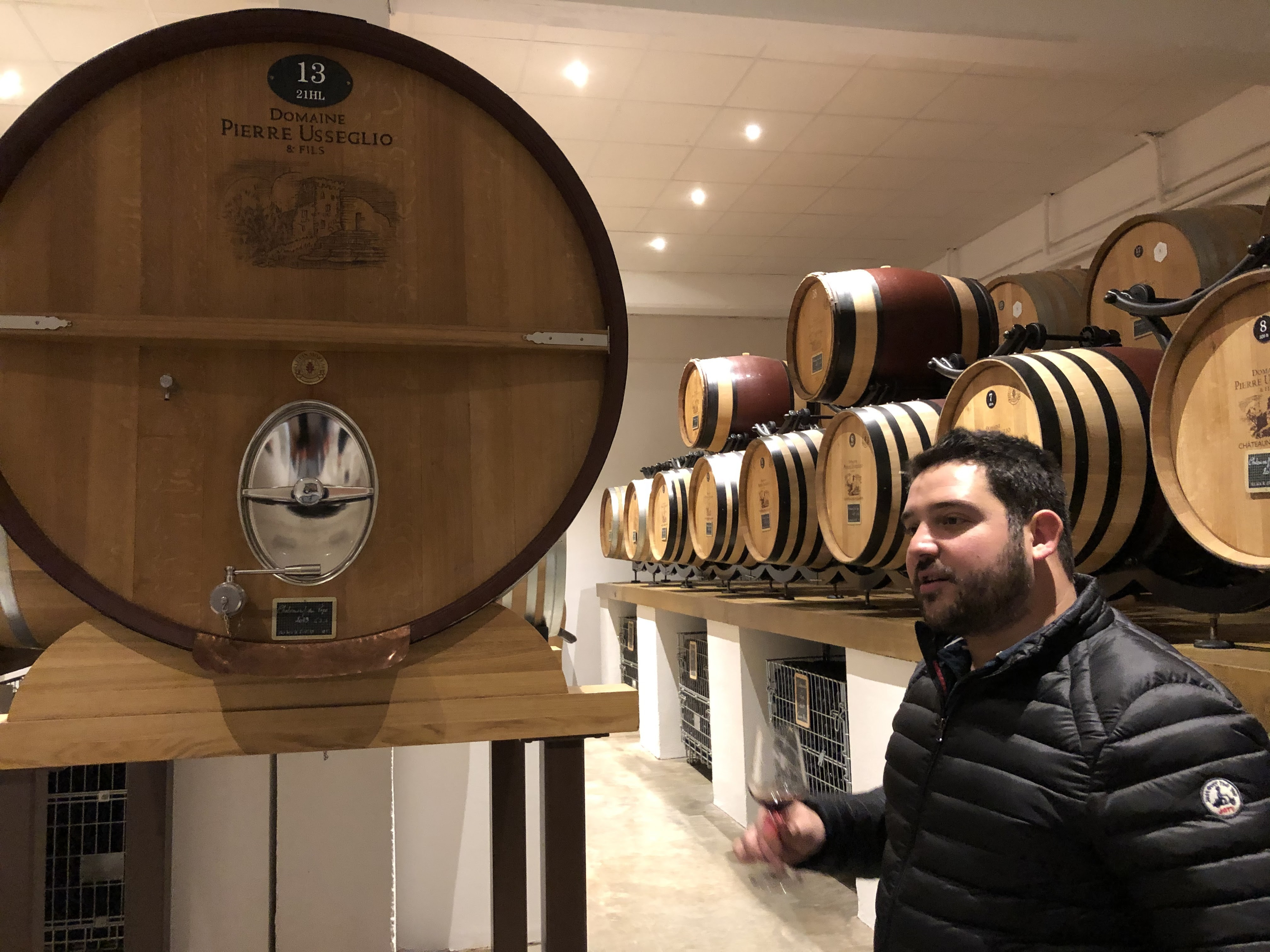
Presently, the estate covers nearly 100 acres, 59 acres are dedicated to Châteauneuf-du-Pape red, 2.5 acres to Châteauneuf-du-Pape white, 14 acres in Lirac, 14 acres in Côtes-du-Rhône, and 5 acres that produce their Vin de France.

Half of the estate’s vines are over 65 years old, with the other half over 40 years old. Yields are very low and the harvest is always manual with highly selective sorting. The result is wines that are both lush and powerful, with loads of red fruit and spices.

2016 is being heralded as one of the finest vintages in Châteauneuf-du-Pape in the past few decades, with some winemakers even comparing it to the epic 1990 vintage. Warm conditions throughout 2016, along with reduced yields, have resulted in wines of superb concentration. Don’t miss out on this monumental vintage. Join us this Saturday to see what the fuss is about.

Saturday Sips Review Package (6-Pack for $200 All-Included): Châteauneuf-du-Pape, Lirac, and Côtes-du-Rhône from a Next-Generation Star Estate

The price for this Saturday Sips Review Package includes tax and delivery, as well as a 15% discount. We will also honor a 10% discount on any bottles you might wish to add to the package.


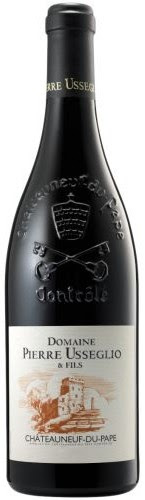
1 BOTTLE Châteauneuf-du-Pape (2016) RED, Regular Price: $62
A blend of 80% Grenache, 10% Syrah and 5% each Cinsault and Mourvèdre from soils of sand, clay, limestone, and rolled pebbles. This diversity of terroir allows for complex and balanced wines. The vines are between 40 and 75 years old. Maturation takes place in oak barrel, demi-muids, and concrete vats over a period of 12 months. It’s a wine that’s deceptively easy to drink, with intoxicating notes of raspberries and chocolate that transition to a long and smooth finish.


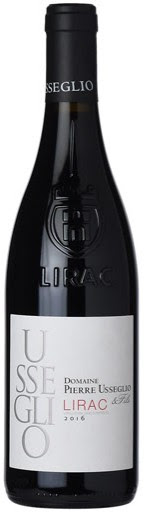
2 BOTTLES Lirac (2017) RED, Regular Price: $35
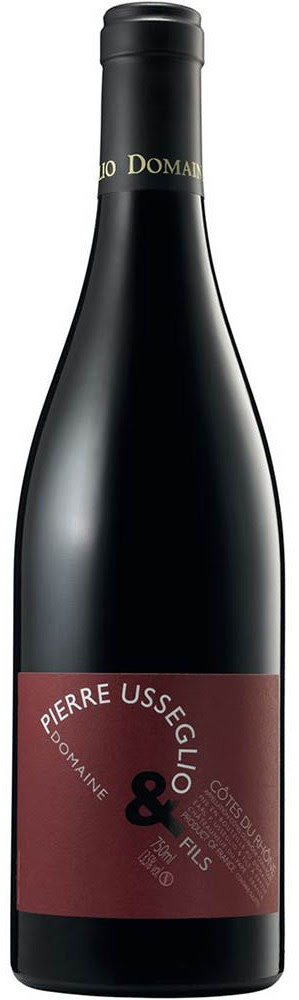
A blend of 60% Grenache, 15% Syrah, 15% Mourvèdre, and 10% Cinsault from clay and pebble soils. The vines are around forty years old. The grapes are harvested manually and completely destemmed. The wines are aged in concrete vats and demi-muids over a period of 12 months. The 2017 Lirac is a sturdy, solidly built wine loaded with notes of plum, cola and spice. It’s full-bodied, finishing warm and velvety.


3 BOTTLES Côtes-du-Rhône (2016) RED, Regular Price: $30
A blend of 60% Grenache, 20% Mourvèdre, and 20% Cinsault from sandy and stony soils in several sites adjoining Châteauneuf-du-Pape. The wine matures for six months in concrete vats and is bottled in the spring after harvest. This 2016 vintage Côtes-du-Rhône overdelivers in every way, drinking much like a baby Châteauneuf-du-Pape. Cherry liqueur and hints of chocolate lead into a dense and creamy finish.

Posted on Leave a comment

Return of Saturday Sips + (6-Pack Sampler for $220 All-Included) – Accessible Côte de Beaune and Côte de Nuits Burgundy: “Bourgogne Régional AOC” from 3 Top Producers

Although Bourgogne Régional AOCs are the first step in classification, and around 50% of the greater region’s production, not all of its wines are created equal. A savvy consumer (with the help of their knowledgeable local wine merchant) can find excellent values by purchasing regional wine from the area’s top producers.

In many cases the vineyards that produce the fruit for these wines lie near (sometimes even in) more prestigious appellations, quite often separated by mere feet. The vineyards tend to be located along the foot of the wine-growing slopes on limestone soils mixed with some clays and marls, depending on the geographical situation.

This Saturday’s tasting and 6-pack sampler is a great introduction into the region that won’t make too much of a dent into the wine budget. And if you’ve already succumbed to the beguiling beauty of Burgundy’s wines, the sampler provides a nice mix to drink now or lay down for a couple of years while you’re waiting for your more prestigious bottles to develop.

(6-Pack Sampler for $220 All-Included) – Accessible Côte de Beaune and Côte de Nuits Burgundy: “Bourgogne Régional AOC” from 3 Top Producers

This 6-Pack Sampler contains two different bottles from each of these three renowned producers. The price includes tax and delivery, as well as a 10% discount. We will also honor a 10% discount on any bottles you might wish to add to the package.

Domaine Thibault Liger-Belair

Cousin to Vicomte Liger-Belair of La Romanée fame, in 2001 Thibault Liger-Belair took over storied family property in Nuits-Saint-Georges, reclaiming vineyards which had been contracted out to various sharecroppers and creating a new domaine under his own name. The properties include some of the most hallowed vineyards in Burgundy: The Grands Crus of Richebourg and Clos de Vougeot, as well as the Premier Cru of Les Saint-Georges that is one of the few vineyards in modern-era Burgundy to be considered for promotion to Grand Cru.

“Les Grands Chaillots” (Bourgogne 2017) RED Regular Price: $45

100% Pinot Noir. An assemblage of different terroirs located in the Côte d’Or. A third comes from the vineyards of an estate in Nuits-Saint-Georges and two-thirds comes from other appellations such as Marsannay, Côtes de Nuits, Beaune, and Ladoix-Serrigny.

 “La Corvée de Villy” (Bourgogne Hautes Côtes de Nuits 2017) RED, Regular Price $50

100% Pinot Noir. Located in the upper reaches of Nuits-Saint-Georges on the Chaux plateau, this 1.75 acre vineyard, planted in 1988, is on very stony soil mainly composed of lava stone.


Domaine Mongeard-Mugneret

Vincent Mongeard works about 74 acres spread over 35 appellations. While the estate is based in Vosne-Romanée, like Thibault Liger-Belair he produces wines from some of the most cherished parcels in all of Burgundy, including Richebourg, Grands-Échezeaux, Échezeaux, Clos de Vougeot, and Vosne-Romanée Les Suchots. All parcels are worked sustainably (la lutte raisonée) with a focus on soil health. Fruit is harvested exclusively by hand and manually sorted in the winery. Fermentation begins naturally with indigenous yeasts.

(Bourgogne 2018) RED, Regular Price: $35

100% Pinot Noir from a six acre plot of 28-55 year old vines. Soils are Jurassic in origin with broken stones and limestone grit on a deep clay matrix.

“Les Dames Huguetttes” (Bourgogne Hautes Côtes de Nuits 2018) RED, Regular Price: $43

100% Pinot Noir from six acres of calcareous and deep soils on Argovian marls. The average age of vines is 35 years and maturation takes place in one year old barrels.


François Carillon 

A most distinguished name in Burgundy, the Carillon estate dates back to 1632. The family still occupies the same site in Puligny-Montrachet, between the church and the old château which belonged to the original nobles of the village. Today François Carillon leads the estate, crafting wines of tradition and finesse. The domaine holds parcels in some of Côte de Beaune’s most famous vineyards: the Grand Cru of Chevalier-Montrachet as well as some of the finest Premier Cru vineyards in Puligny-Montrachet and Chassagne-Montrachet.

(Bourgogne 2018) RED, Regular Price: $32

100% Pinot Noir from 60+ year old vines in Puligny-Montrachet and the hamlet of Corpeau. An ambitious regional wine that sees 12 months aging in 10% new oak barrels.

(Bourgogne Aligoté 2018) WHITE, Regular Price: $28
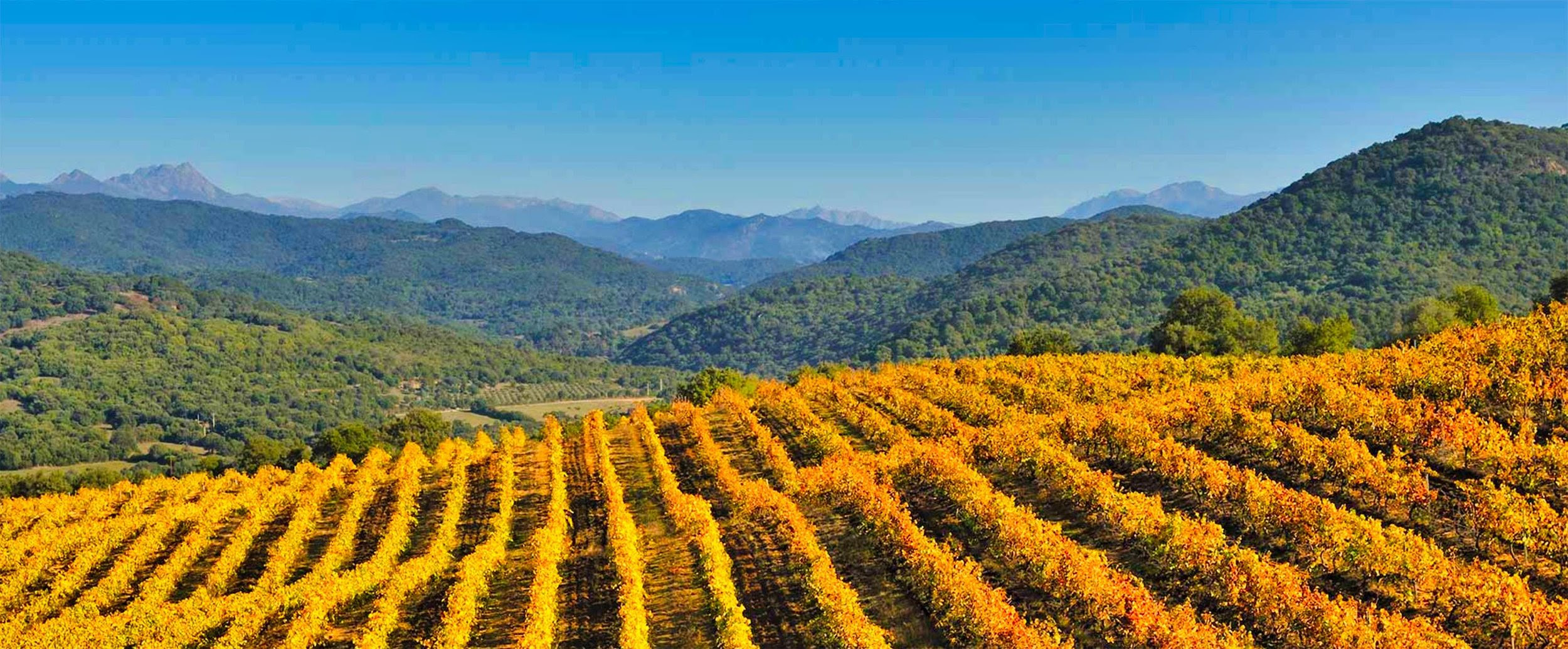
The other white grape of Burgundy, Carillon’s Aligoté is grown below Puligny-Montrachet and in the hamlet of Corpeau. Fleshy and crisp.

Posted on Leave a comment

In-store Saturday Sips + (6-Pack Sampler for $240 All-Included): Corsican Wines to Complement Autumn Food from Three of the Island’s Top Producers

What’s not to like about autumn? Cozy fleece jackets, the musky-sweet smell of a leaf pile, rich meals filled with recently harvested vegetables slow-roasted in the oven…L. M. Montgomery expressed the sentiment gracefully in her novel, Anne of Green Gables, “I’m so glad I live in a world where there are Octobers.”

This Saturday we are featuring a beautiful selection of Corsican wines selected specifically to enhance the autumn table. As France’s most southerly vineyard area, you might expect the wines of Corsica to be ultra ripe and high in alcohol. In fact, the island’s unique characteristics allow talented producers to achieve the type of depth and character found in some of the world’s most famous winemaking regions. While the Mediterranean sun easily ripens fruit to create warmth and richness, the moderating effects of wind and elevation keep the wines fresh and balanced.
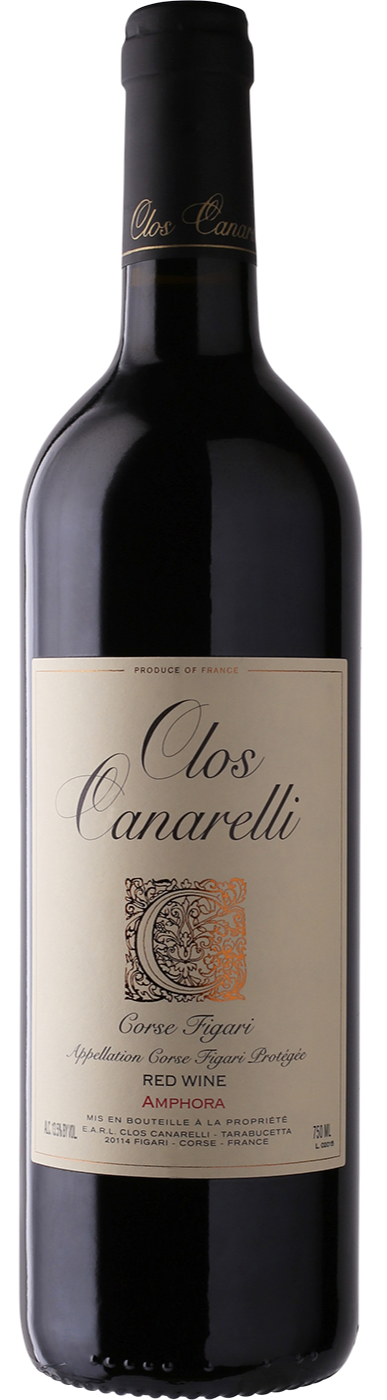
We invite you to explore the landscape of the island through three of its top producers and most significant grape varieties. The featured white wine has plenty of heft to pair with most fall fare while the two red wines will have enough freshness so that they won’t become cumbersome as the meal stretches on. It’s almost as if Burgundy met the Mediterranean and had three “love children” and we put them in a box just for you.

6-Pack Sampler ($240 All-Included): Corsican Wines to Complement Autumn Food from Three of the Island’s Top Producers

This 6-Pack Sampler contains two bottles from each of these three renowned producers. The price includes tax and delivery, as well as a 10% discount. We will also honor a 10% discount on any bottles you might wish to add to the package.


Clos Canarelli (Corse Figari 2016) RED, Regular Price: $49
Possessing abundant freshness, complexity, and aromatic intensity, the wines of Yves Canarelli are some of the most celebrated and sought after from the island. A blend of mostly Niellucciu (closely related to the Italian Sangiovese) with around 15% each of Syrah and Sciacarellu. The fruit is from the granite and red alluvial soils on the southern tip of Corsica in the appellation of Corse Figari. Ripe, red fruits blend with notes of spice and herbal maquis shrubland that grows on the island’s hills. Plum and cherry fruit show in abundance before leading to a hauntingly long and complex finish.


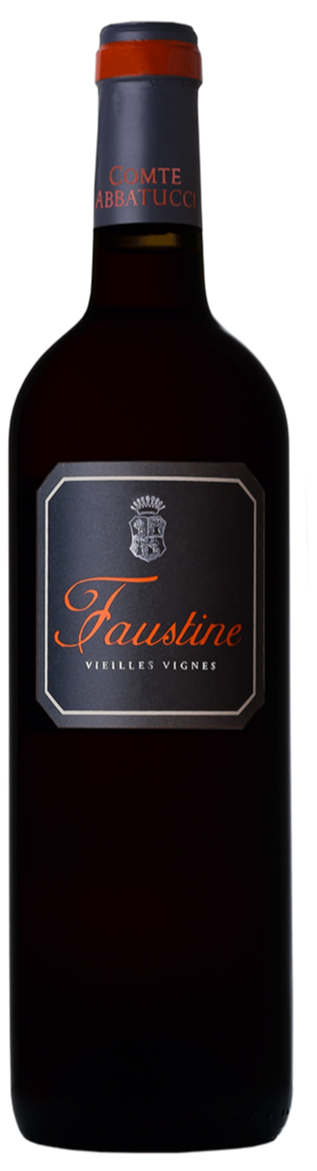
Domaine Comte Abbatucci “Cuvée Faustine” (Vin de France 2017) RED, Regular Price: $39
Easily one of the top producers in Corsica, Jean-Charles Abbatucci creates majestic and fiercely unique wines from the granitic western coast of Corsica. He has created a pristine poly-culture ecosystem on his estate south of Ajaccio that includes groves of olive trees on ancient terraces, and large swaths of untouched forests. The blend is predominately Sciaccarellu with a healthy portion of Niellucciu. If you don’t spend all of your time inhaling the gorgeous scents emanating from the glass, you’ll get mouthfuls of generous ripe fruit balanced by a lively spine of lengthy minerality.


Domaine Orenga de Gaffory “Cuvée des Gouverneurs” (Patrimonio 2017 ) WHITE, Regular Price: $39
Henri Orenga de Gaffory’s clear passion for vine growing and winemaking allow him to translate Patrimonio’s unique terroirs into wines of balanced structure and aromatic concentration. Practicing organic cultivation, the 138 acre estate is situated in northern Corsica, across a range of terroirs, and is a reference point for the appellation. “Cuvée des Gouverneurs” is 100% Vermentino from limestone, chalk and clay soils and fills a glass with exotic floral notes and mineral undertones. Maturation on the lees in French oak (1/3 new) for six to eight months with regular bâtonnage provides a bold and rich mouthful of fruit.

Posted on Leave a comment

Saturday Sips + Saturday Sips Review Package (6-Pack for $310 All-Included): 3 Expressions of Châteauneuf-du-Pape Terroir From Exceptional Producer

If you like biodynamic wines, Châteauneuf-du-Pape, and lauded producers, you’ll find them all at this Saturday’s tasting,

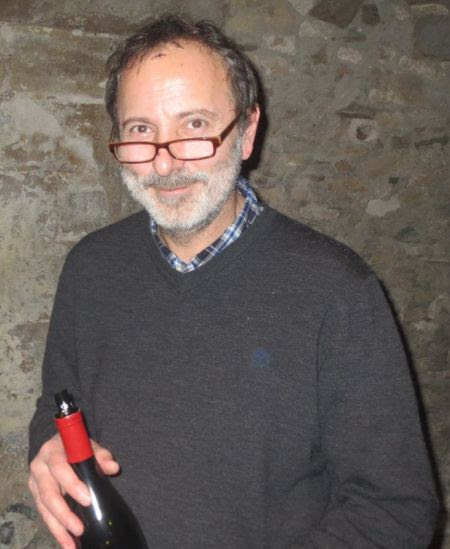
One of France’s most influential vignerons, Jean-Paul Daumen is the fifth-generation owner and winemaker of Domaine de la Vieille Julienne. Jean-Paul began his tenure at the family-run estate in 1990 and immediately began building a reputation as one of Southern Rhône’s most esteemed producers. The estate is comprised of 50 acres, in a single block, on the heights of “lieu-dit Clavin” at the northern limit of Châteauneuf-du-Pape.

Time has shaped these north-facing slopes, placing pebbles, gravels, sands, and red clay over safres (a soft sandstone) from the Miocene Epoch, creating a mosaic of various and subtle terroirs. Jean-Paul exploits these varying parcels to create singular, harmonious, and balanced wines. Each of the parcels are field blends with an average age of 60 years, but the estate also has old Grenache vines over 100 years old.

The vines are cultivated using biodynamic principles. Harvests are entirely done by hand into small boxes to preserve the integrity of the fruit, with a first selection in the vineyard and a second selection when the grapes arrive at the winery. Fermentation is completed with indigenous yeasts and sulfites are used sparingly when bottling. Aging takes place in a combination of foudres and old, oak barrels.

All of this meticulous work in the fields and cellar, combined with exceptionally low yields, are what makes Jean-Paul Daumen’s pure and powerful wines some of the most sought after.

Saturday Sips Review: $310 — 3 Expressions of Châteauneuf-du-Pape Terroir From an Exceptional Producer  

The price for this Saturday Sips Review Package includes tax and delivery, as well as a 15% discount. We will also honor a 10% discount on any bottles you might wish to add to the package.

1 BOTTLE “Les Hauts-Lieux” (Châteauneuf-du-Pape 2016) RED, Regular Price: $99

The 1.1 acre “Les Hauts-Lieux” is the highest elevation and the most sheltered terroir on the slopes. Marlstone soils and shallow safres are covered with quartzite pebbles and very suitable for Mourvèdre vines. A blend of Grenache, Mourvèdre, Cinsault, and Counoise with an average age of 70 years shape a wine that is both vigorous and elegant.

1 BOTTLE “Les Trois Sources” (Châteauneuf-du-Pape 2016) RED, Regular Price: $77

“Les Trois Sources” is 21 acres located mid slope on a mix of safres, pebbles, and red clays. The blend is a classic mix of Châteauneuf-du-Pape varieties including Grenache, Cinsault, Syrah, Counoise, Mourvèdre, Muscardin, Terret Noir, Vaccarèse, Grenache Blanc, Bourboulenc, Clairette, and Picardan (average age 75 years) producing a wine with the perfect balance of power and finesse

2 BOTTLES “Lieu-Dit Clavin” (Côtes-du-Rhône 2017) RED, Regular Price: $42 

85 year old vines on the heights of “lieu-dit Clavin” grow in sand and red clay covering Miocene safres. This is the early maturity part of the slopes, producing tender and seductive wines. 13.6 acres grow this blend of Grenache, Cinsault, Syrah, Mourvèdre, Bourboulenc, Clairette and Grenache Blanc.

2 BOTTLES “Lieu-Dit Clavin” (Côtes-du-Rhône 2019) WHITE, Regular Price: $42
The white grape field blend of Clairette, Grenache Blanc, Bourboulenc, Marsanne, Roussane, and Viognier is located on the northern, steeper, and cooler part of the “lieu-dit Clavin” in marlstone and limestone soils. Average age of the vines is 65 years old, helping to create a wine of depth and complexity.


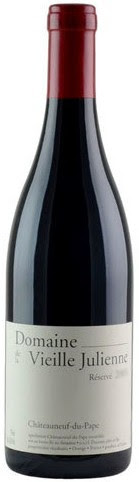
A Rare and Stunning Châteauneuf-du-Pape from Domaine de la Vieille Julienne

“Réservé” (Châteauneuf-du-Pape 2016) RED, Special Price: $289

Domaine de la Vieille Julienne “Réservé” is only made in the best vintages and only in miniscule amounts. It is one of the rarest wines of the appellation.

“Mid-August, when the vineyard is deserted, I like walking in the vineyard of “les Trois Sources”, receiving vines expressions, tasting berries. At this time, I must be receptive and I must appreciate all the details. Some years, depending on the context of the vintage, some vines show specific expressions. Exclusively in this case, these more than hundred years old vines of Grenache (90%), Syrah, Cinsault and Counoise get marked and vinified separately, producing the Réservé. — Jean-Paul DAUMEN